
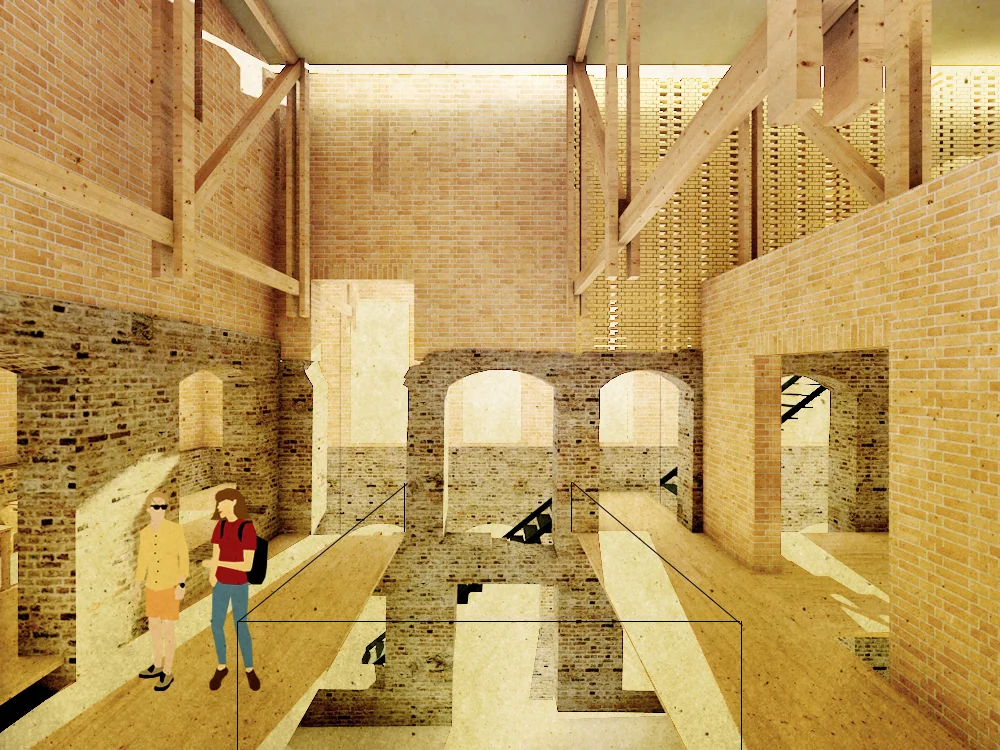
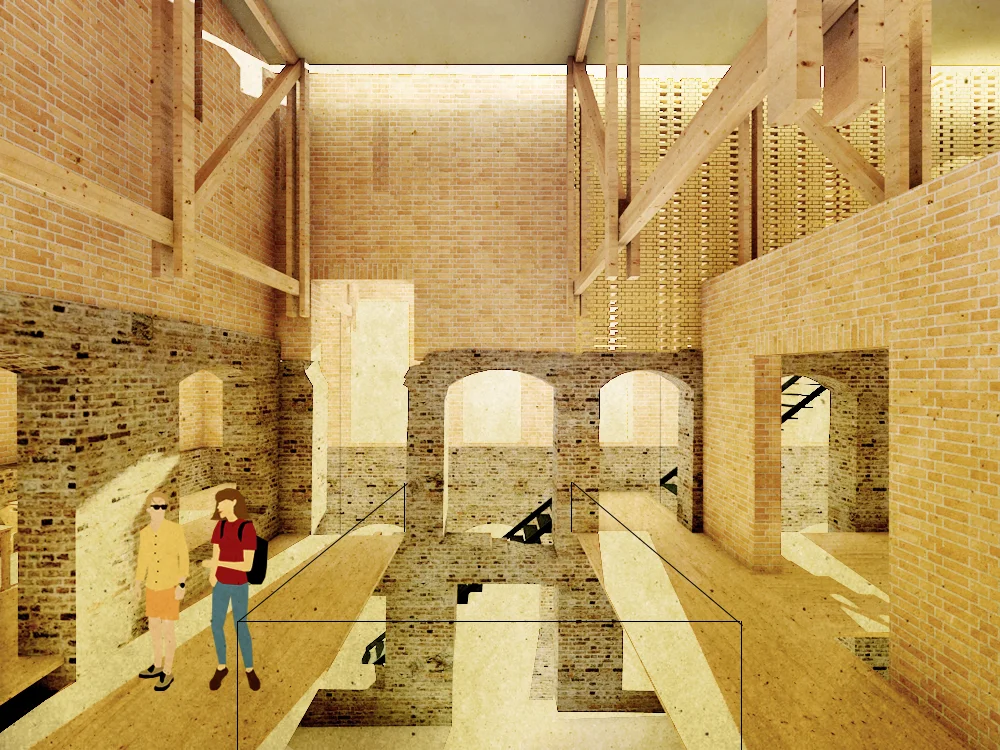
Concept design and restorational strategy for transformation of historic Danish military ruins into school building for Architecture, Craftsmanship and Restoration.
BACKGROUND
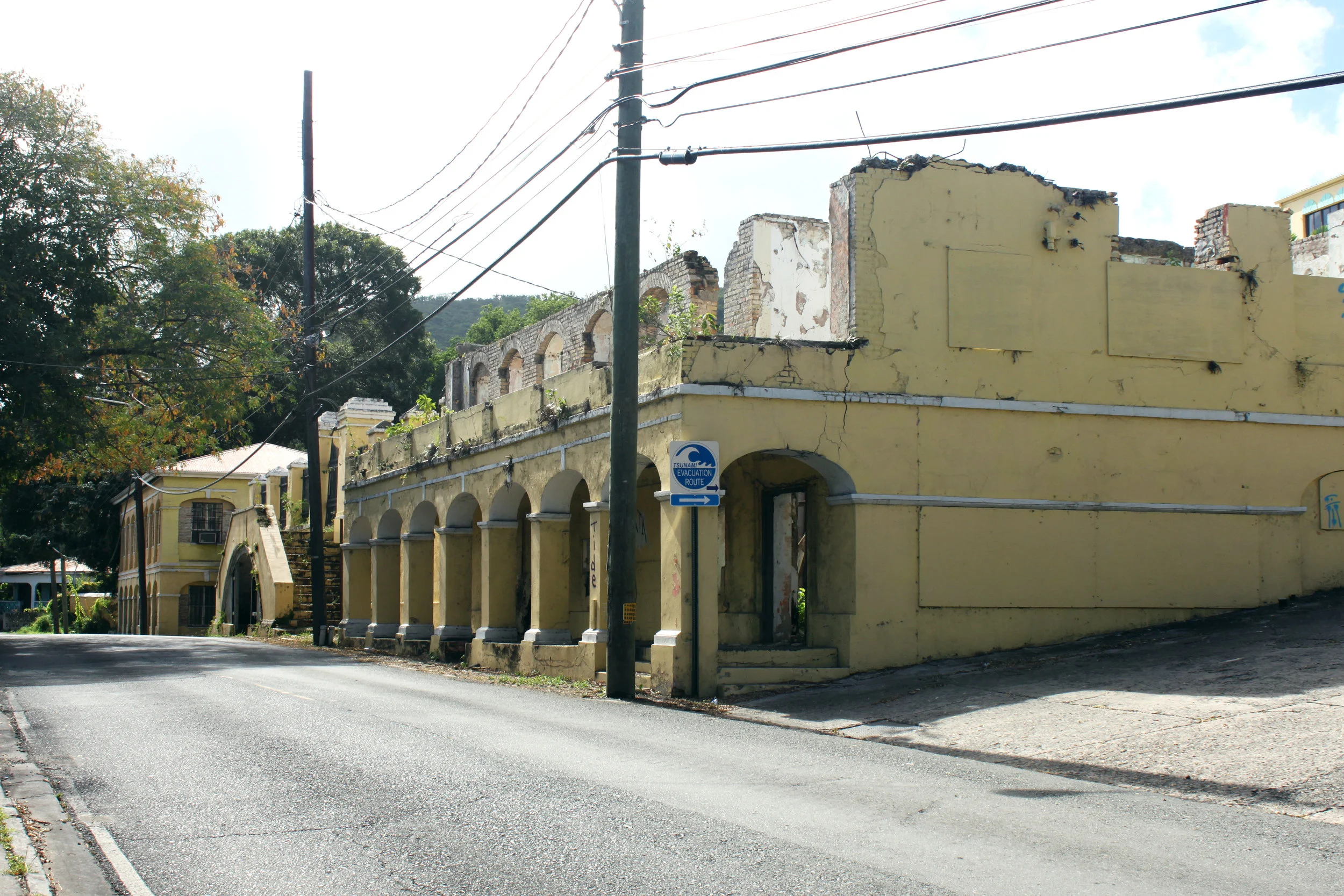
The Danish acquired the Virgin Island St. Croix in 1733 to exploit its tropical climate for sugar production as part of the triangle trade of slaves, weapons and sugar. The city of Christiansted was founded in the natural harbor on the northern side of the island, with orthogonal streets to follow the ideal Renaissance and Baroque town plan. Fort Christiansværn in Christiansted was built to protect the city from seaside attacks and slave rebellions on land, and was completed in 1749. The Military Barracks were built in 1759, on Hospital Street, to serve the Fort Christiansværn.
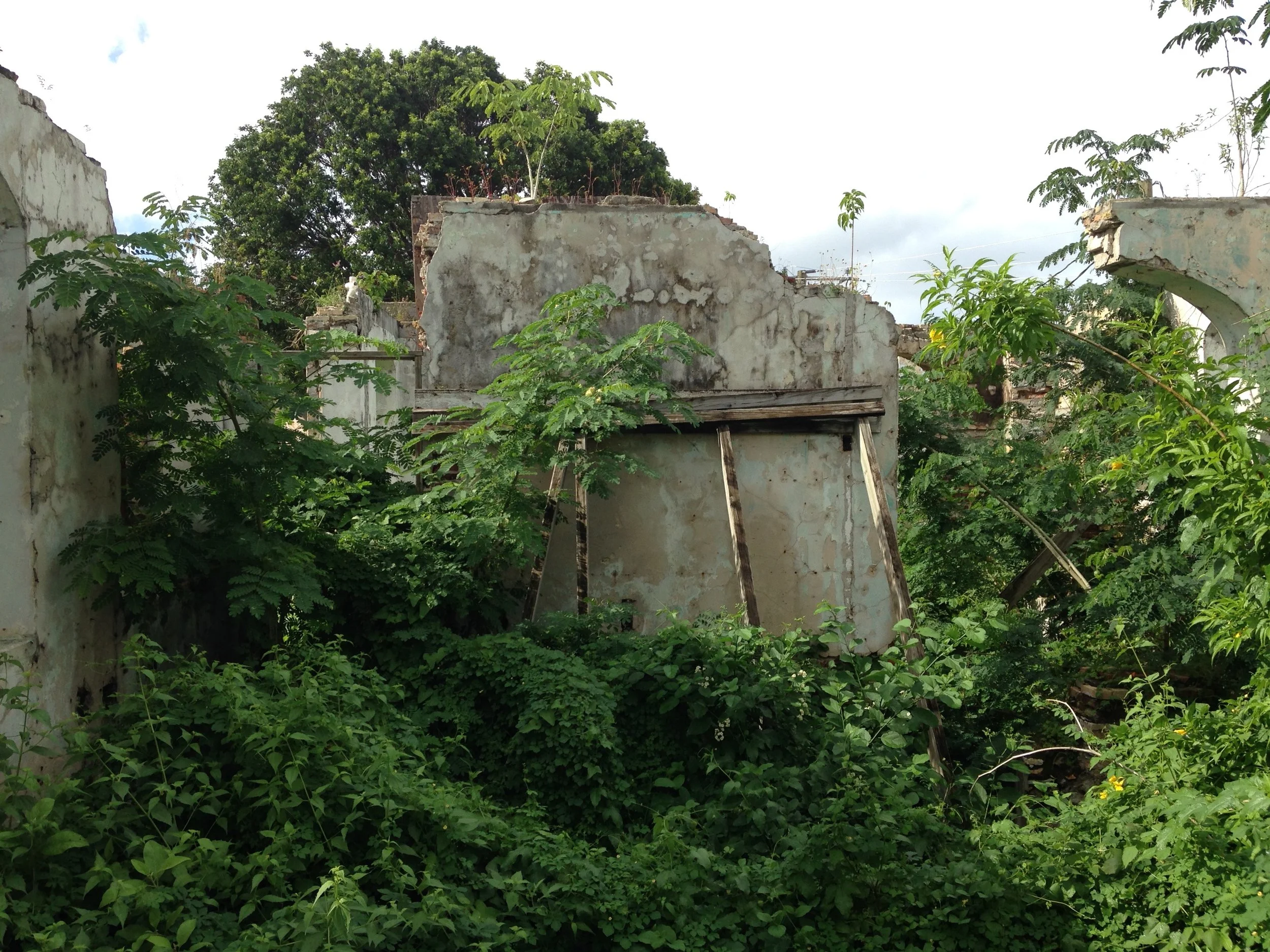
Christiansted has a unique architectural environment, where classical Danish style meets the Caribbean climate, tradition and materials. Today, many of the old buildings are in a technically poor condition, due to the damages of the hurricane Hugo in 1989. In the absence of any craftsmanship education on the island, the task of restoring the buildings is a challenge.
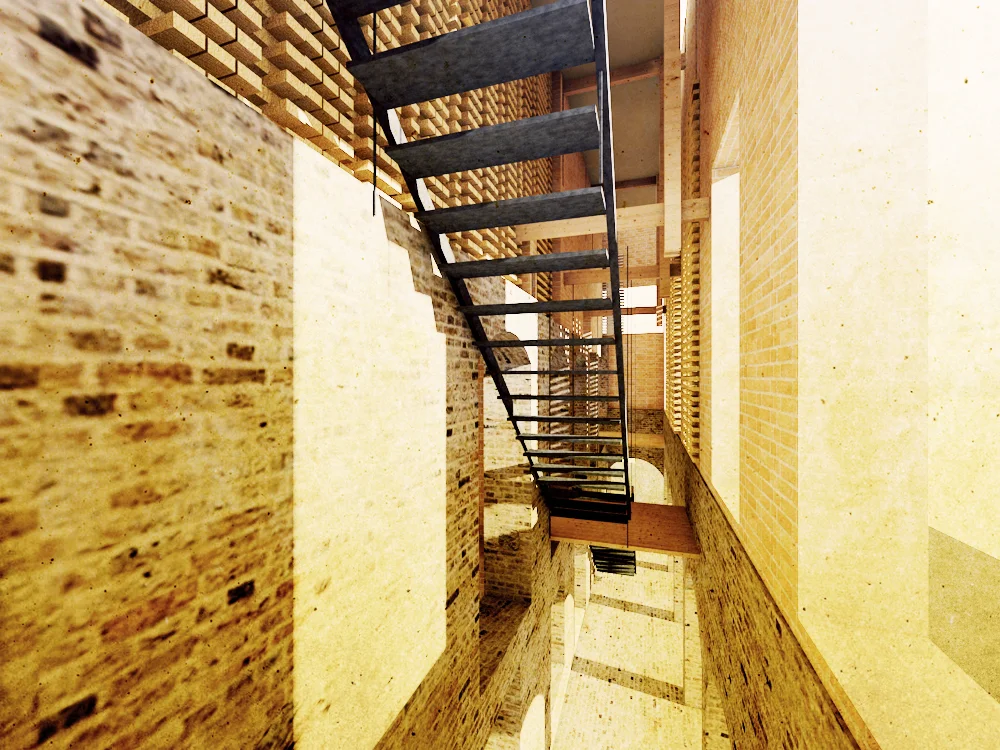
Reinterpretation of archade
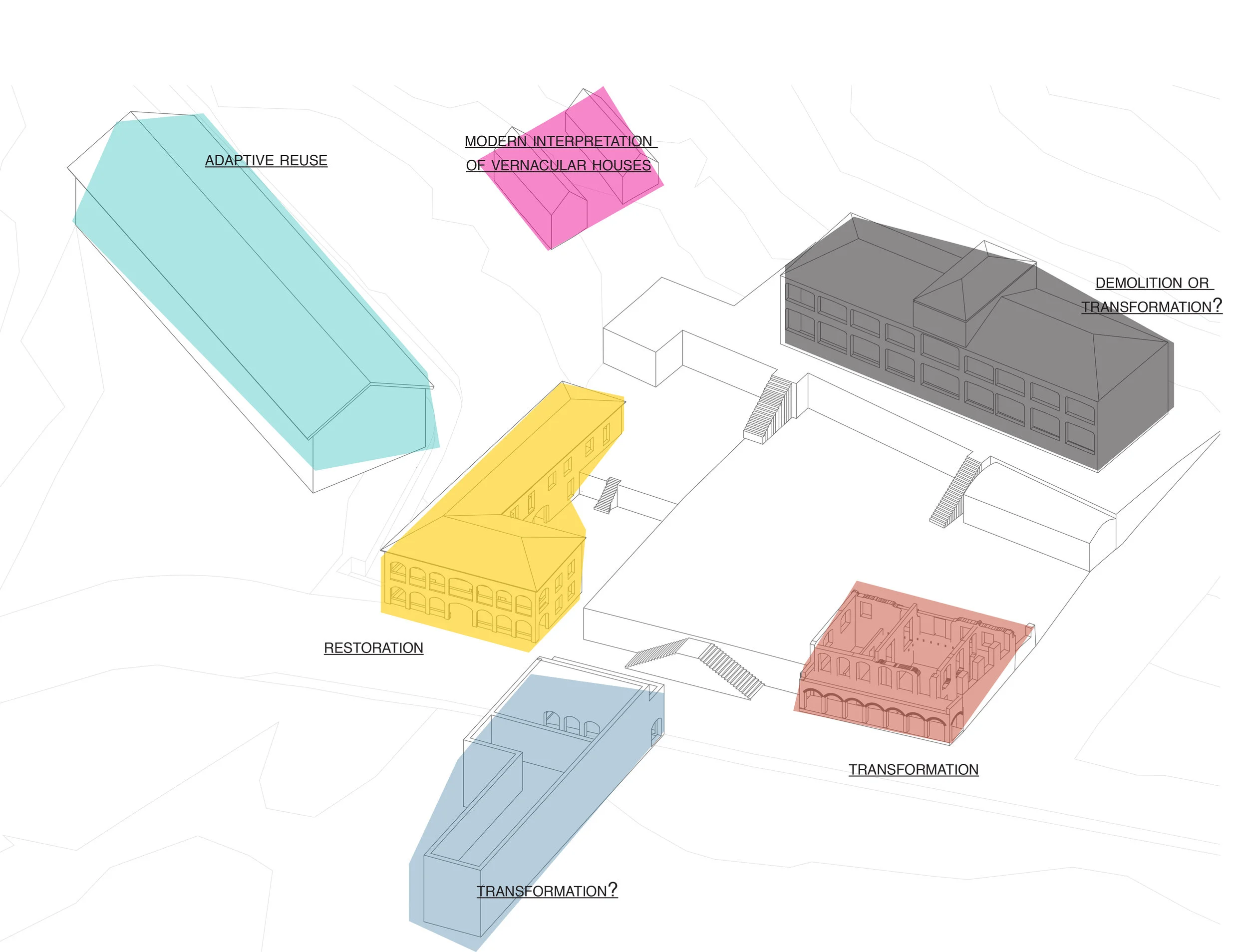
Three design strategies
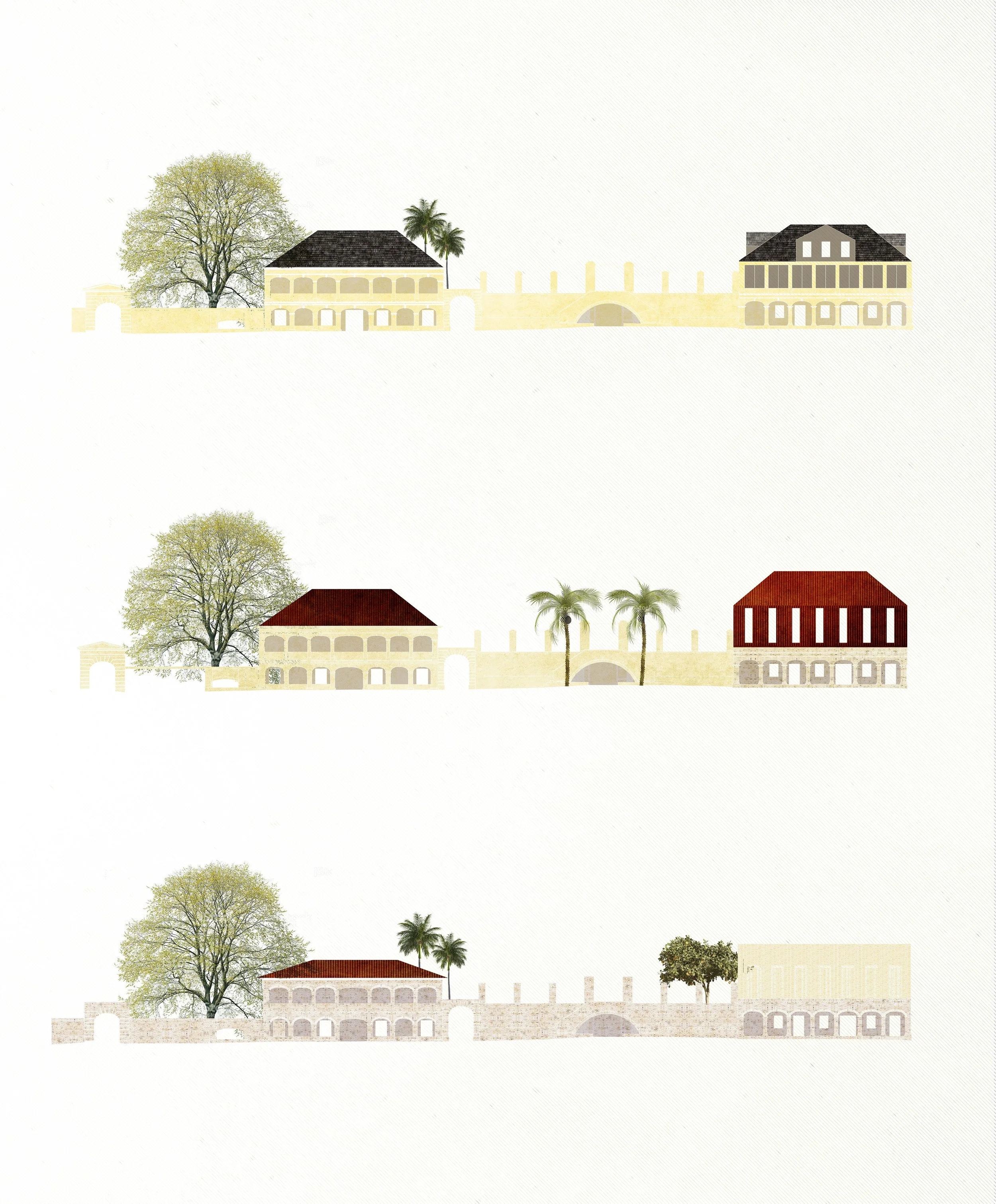
Design Strategies:
1 Restoration
2 Reinterpretation
3 Transformation
EXAMPLE no. 3 transformation
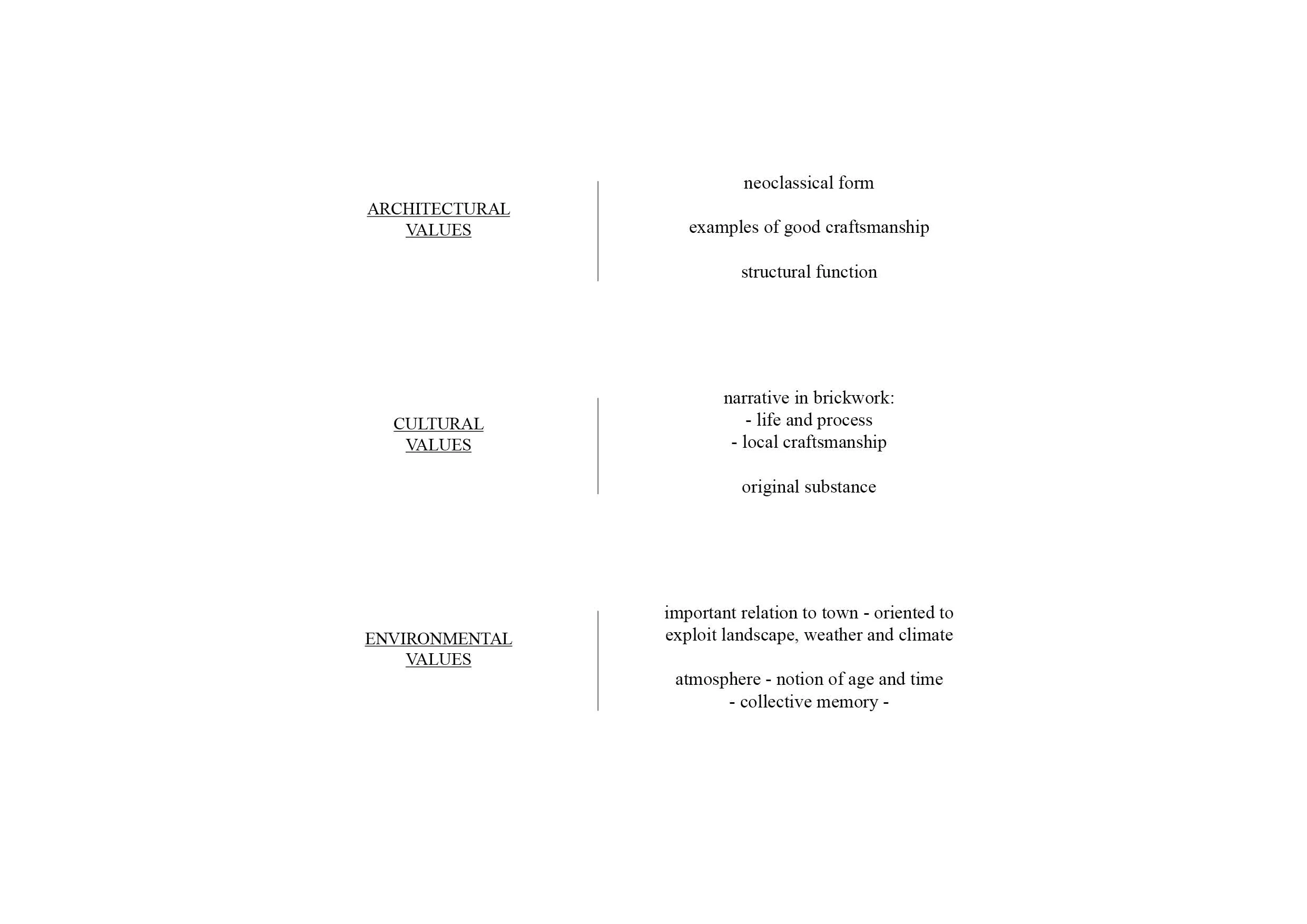
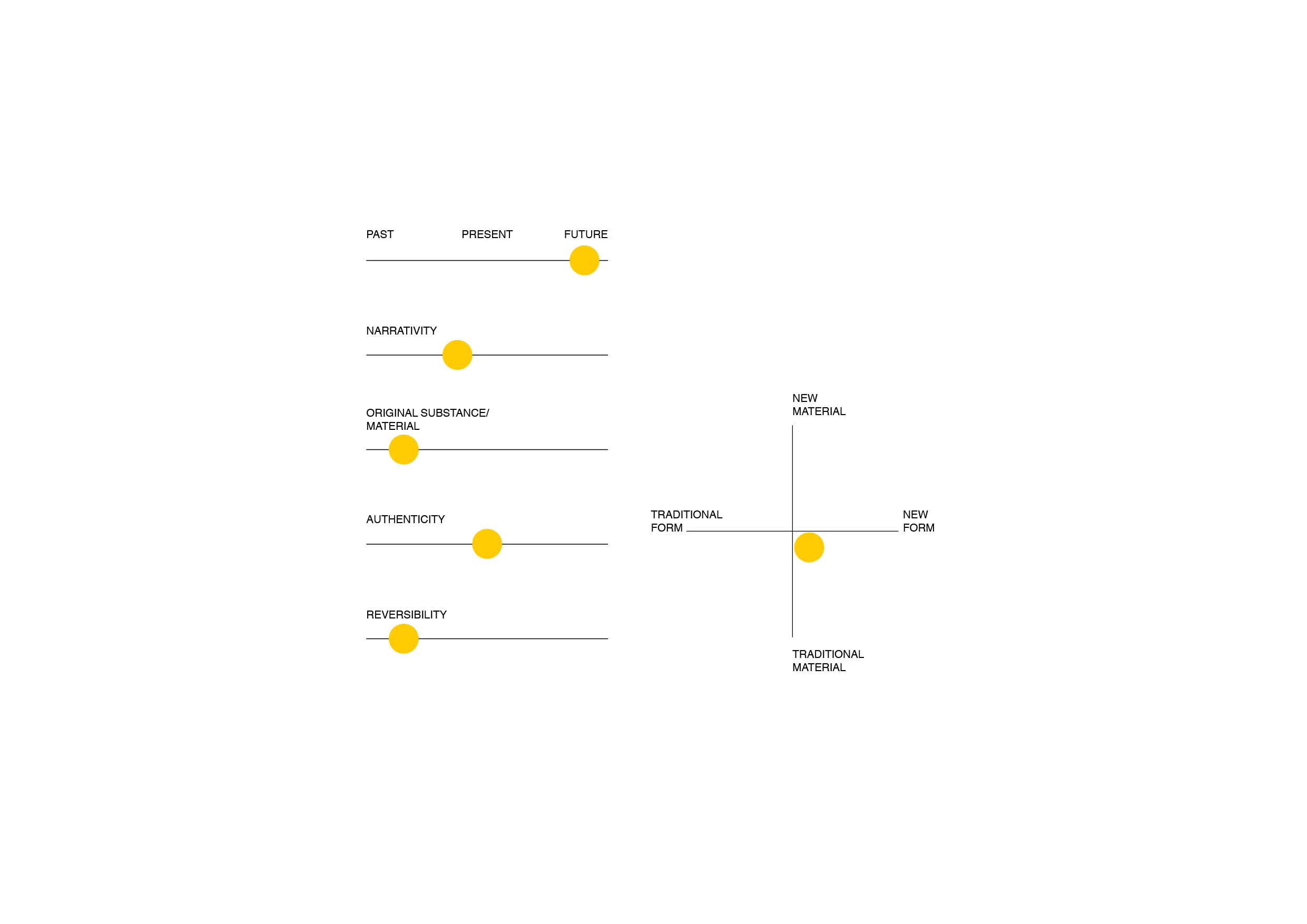
Values and ideal
Sculptural, atmospheric and architectural qualities as they are in the present ruinous state. Values the functional/structural possibilities of the remains. Intervention: Sees new possibilities in the decay and openness and seeks to preserve a strong atmospheric intervention. Mainly addition of material
«The spirit only lives on in the transformation/metamorphosis. The butterfly never gets back in the cocoon again, nor the snake in its old skin»
Dehio
Identity and narrative
Phoenix´ rise from the ashes. Story of the next chapter in brick
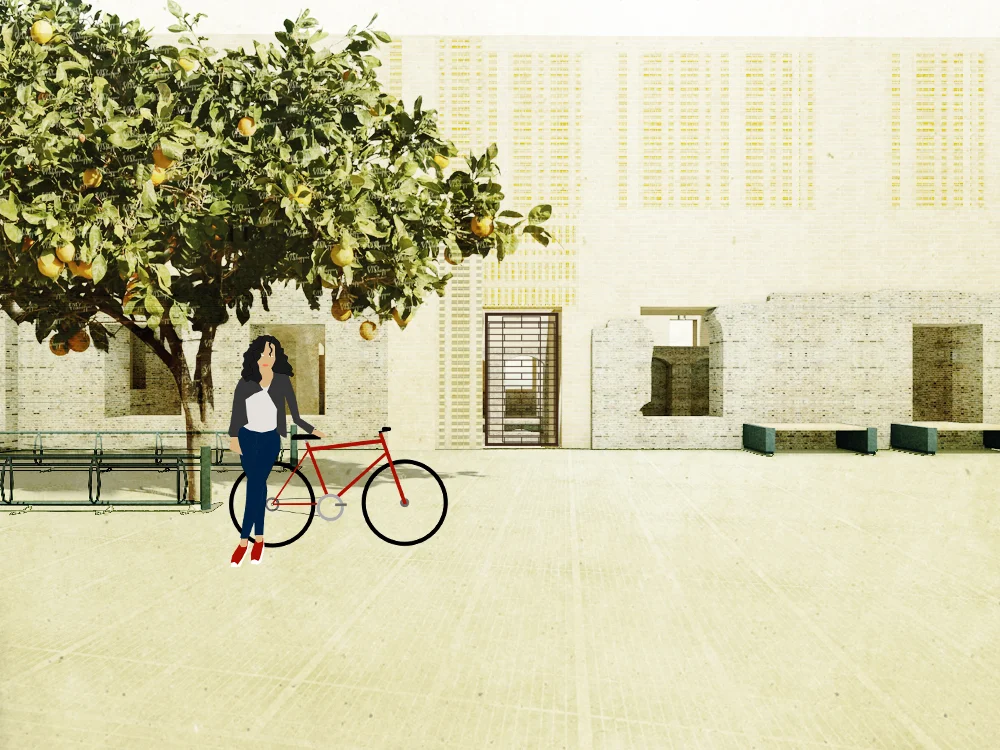
Experience and atmosphere
Notion of time and complexity in the substance. New flow and new spaces
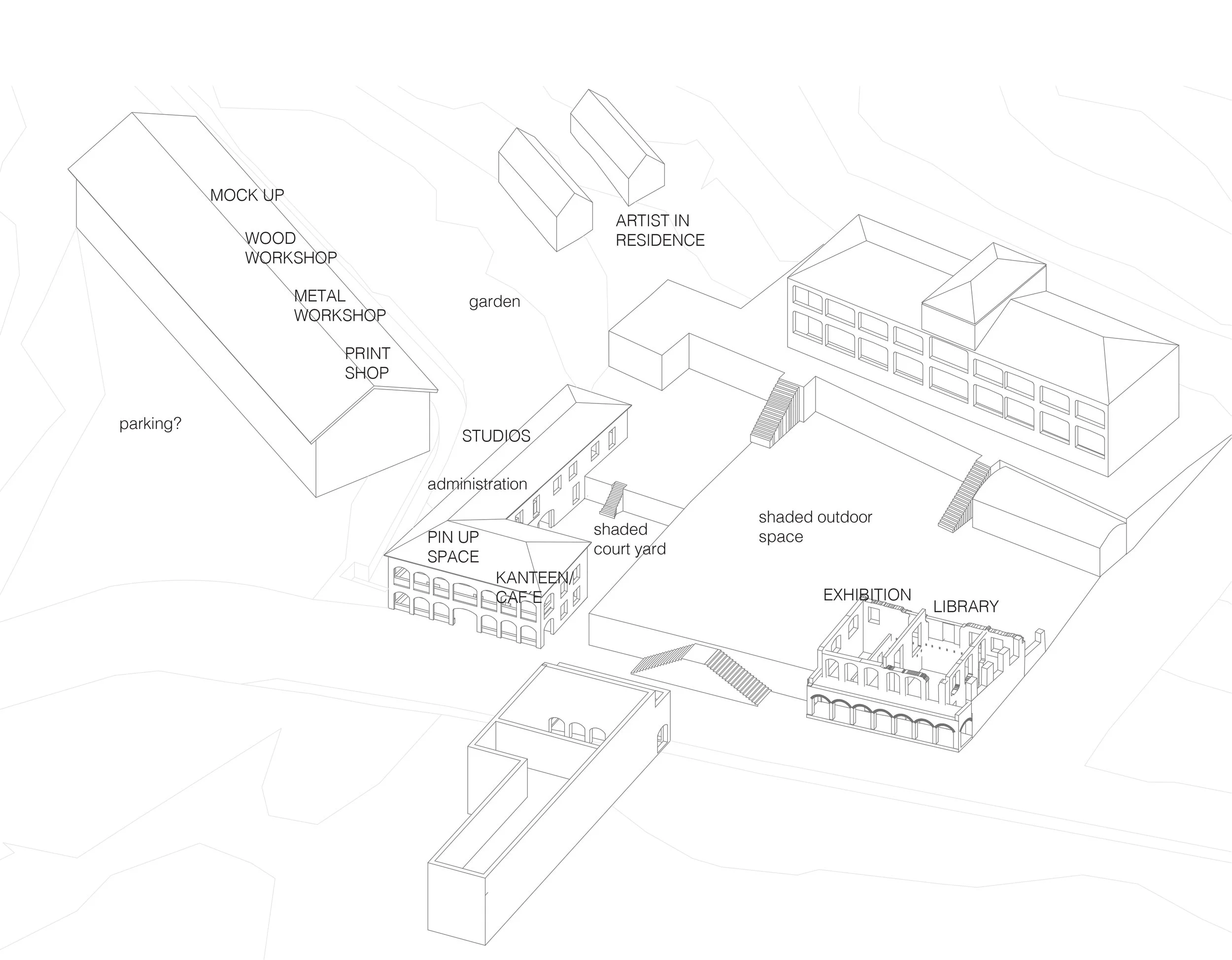
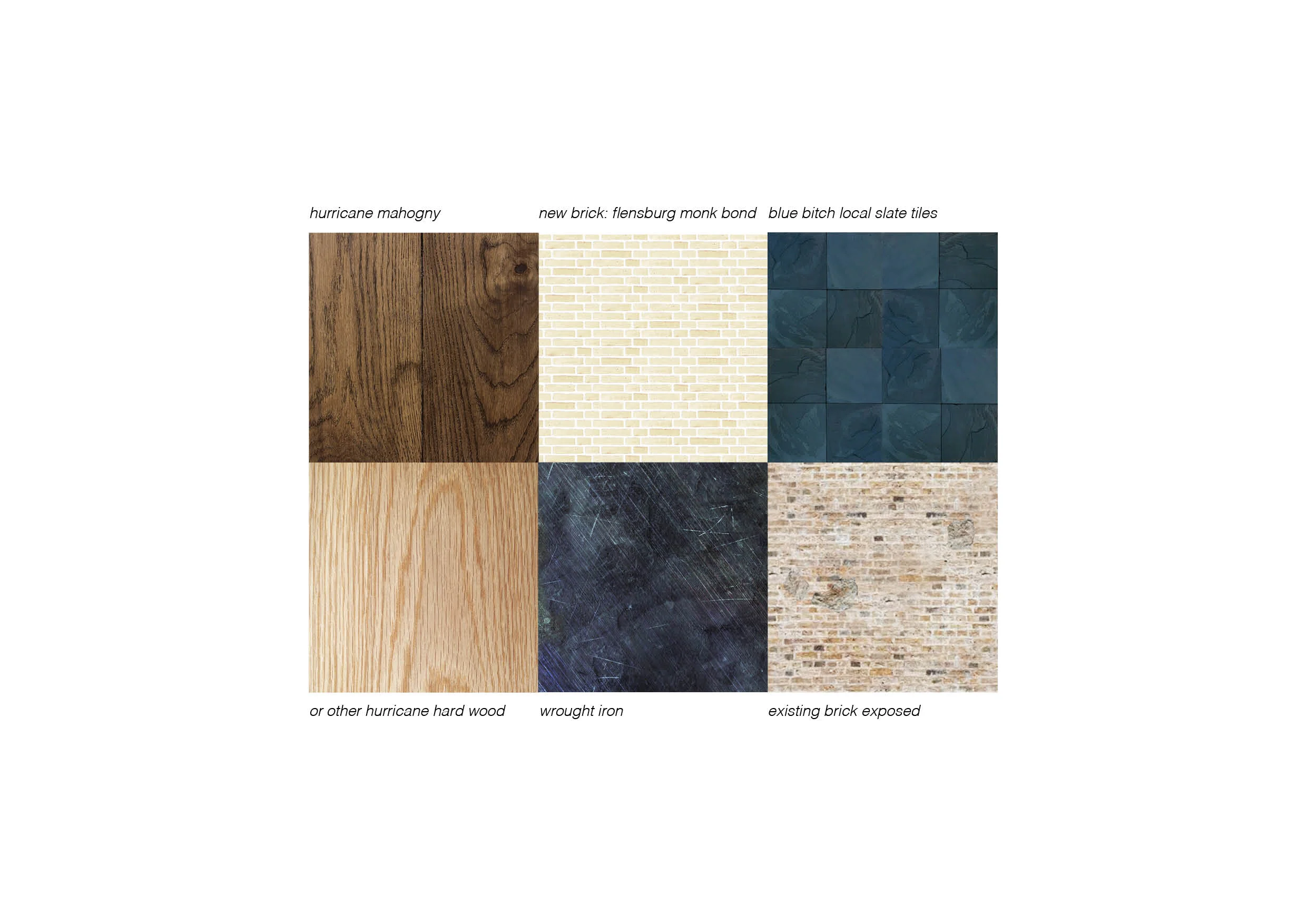
CONCEPT and program
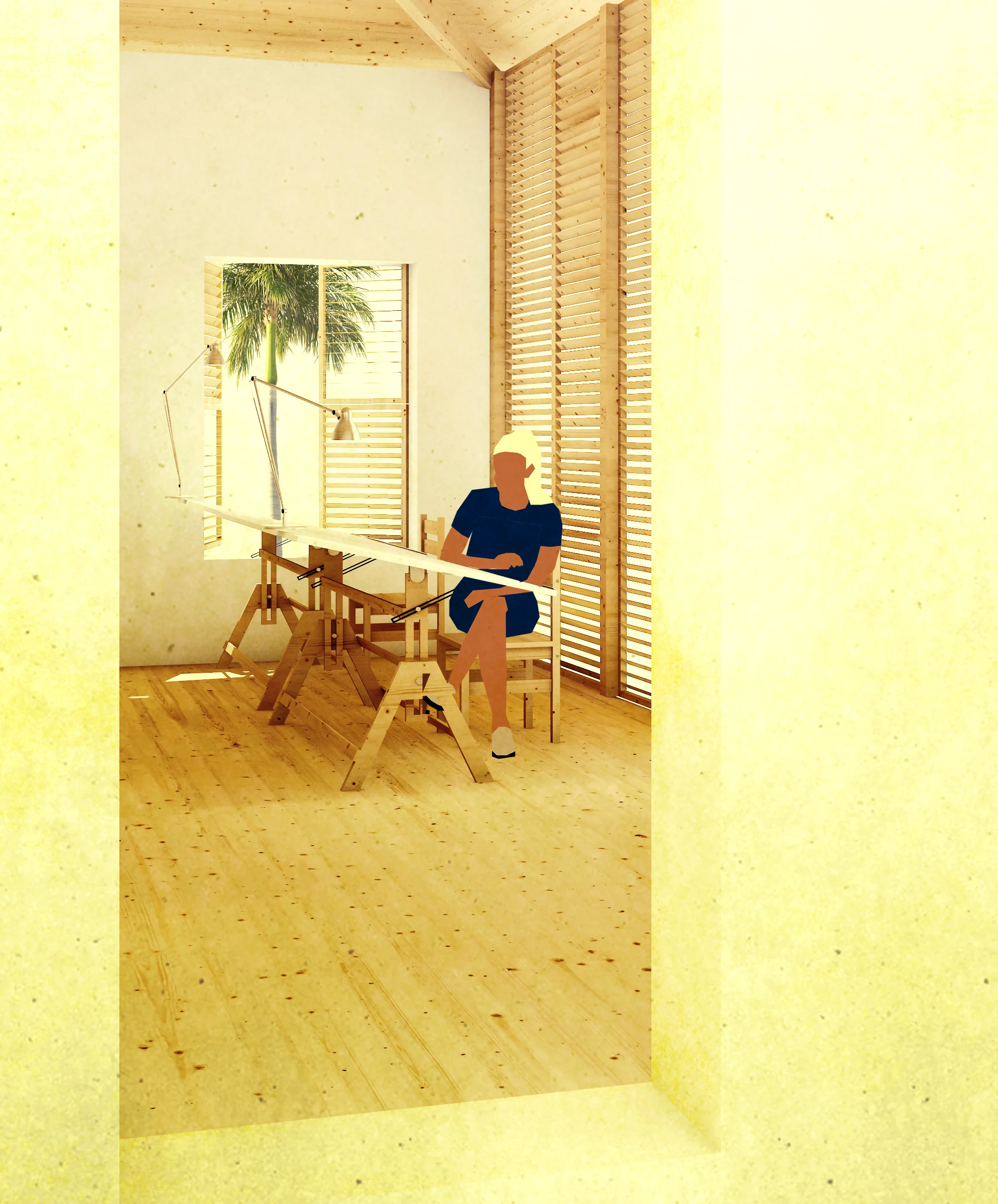
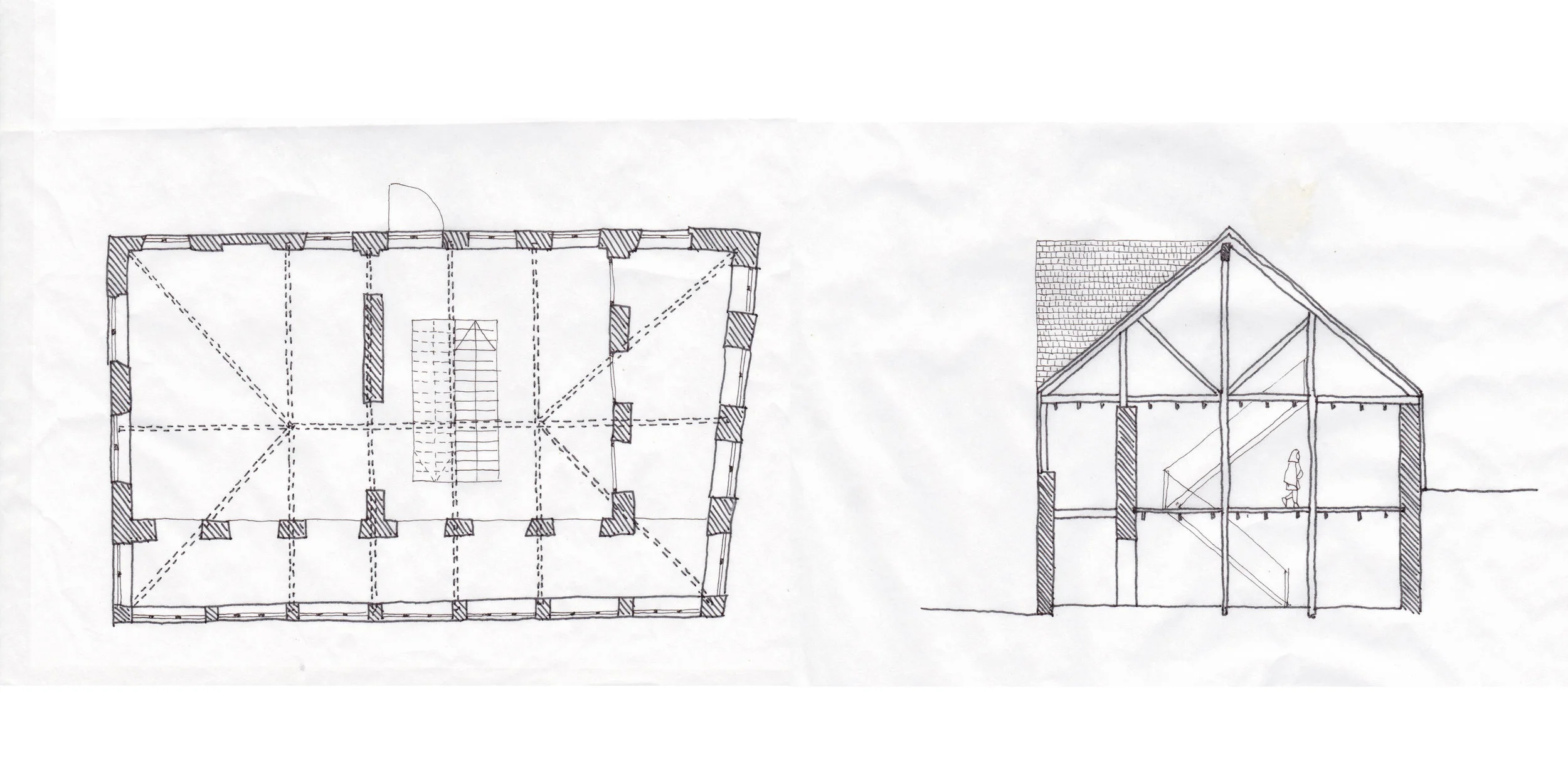
Hand Sketches

Vibes