
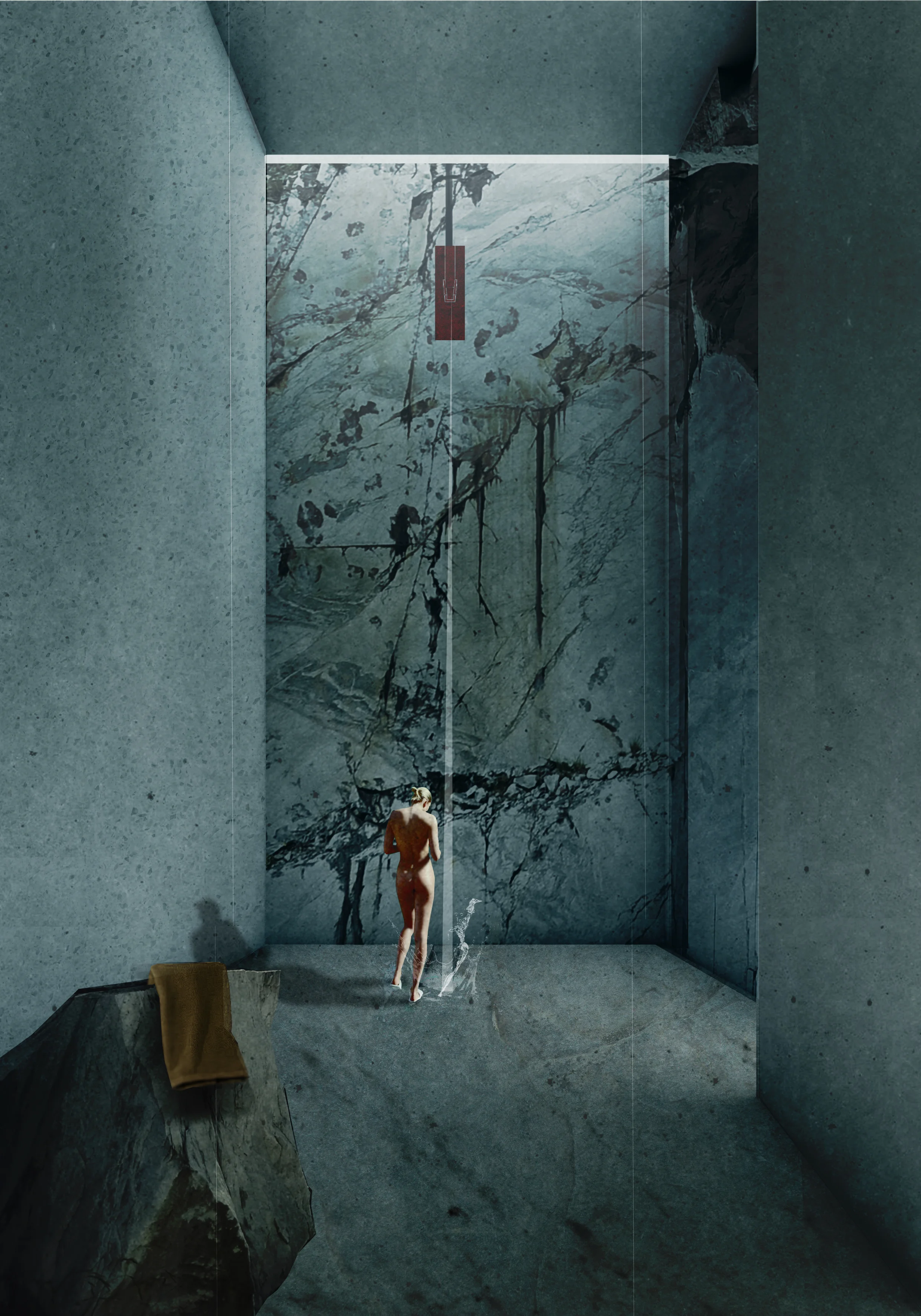
About
Motivated by the always topical asymmetry between nature and culture, this project seeks to point at the duality in manufactured landscapes; the beautiful existing together with the grotesque. It does so through the investigation of spatial potentials in quarrying, and the design of a natural bath in an abandoned marble quarry. At the top of Carrara’s enormous marble industry, a quiet space for sweaty mountain hikers and the Carrarese is created in the midst of all the noise.
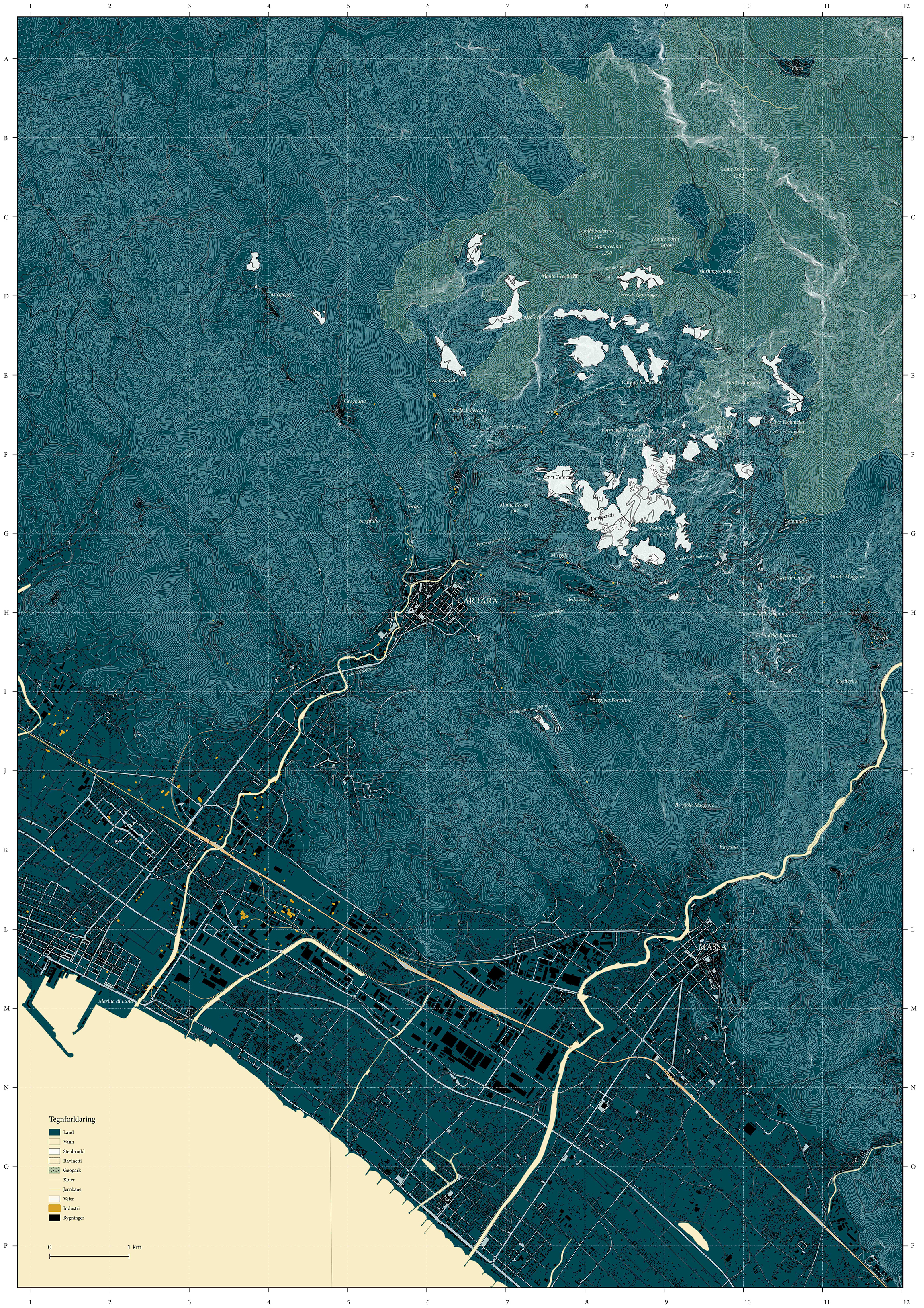
Carrara
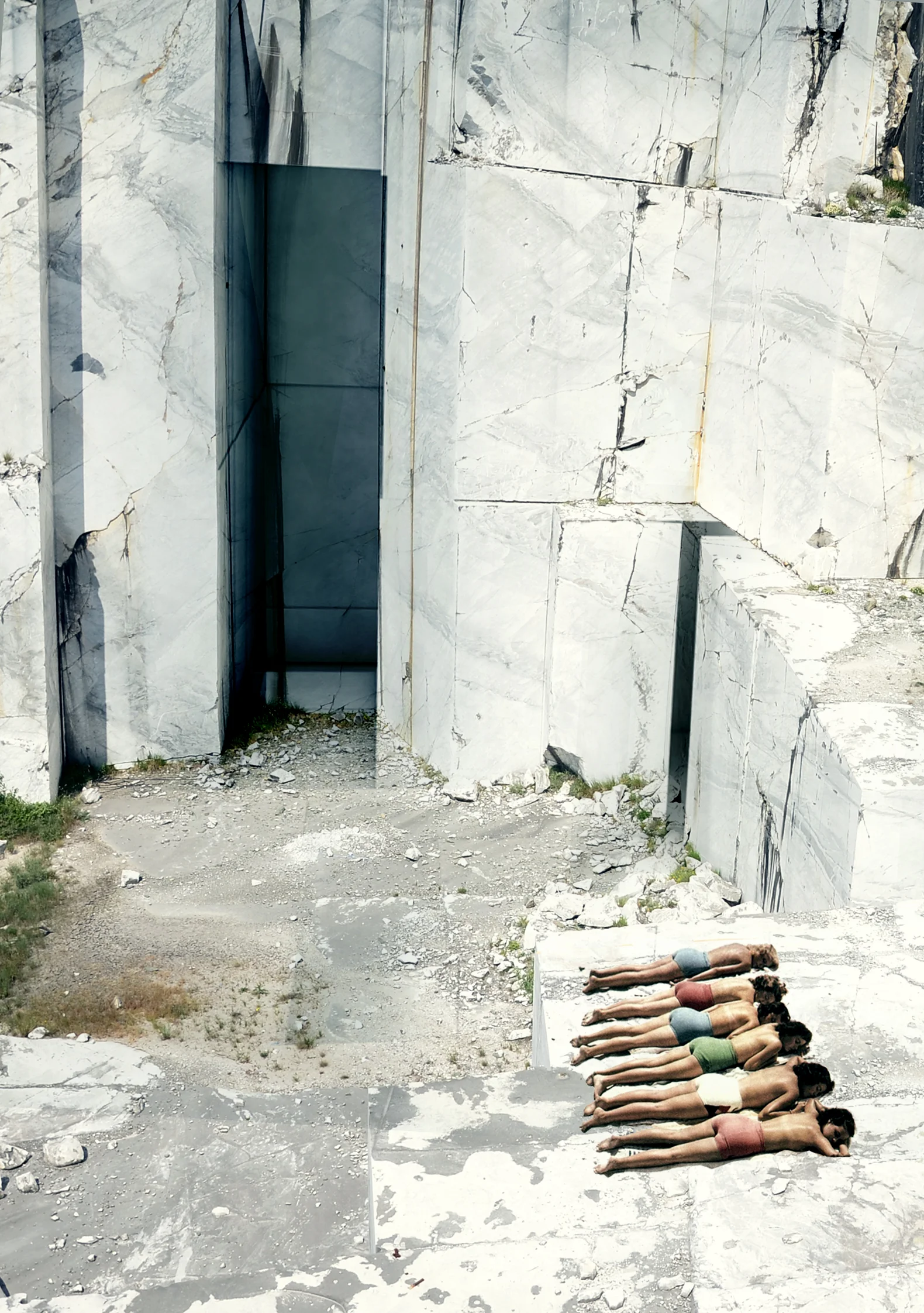
Sun Deck and Entrance
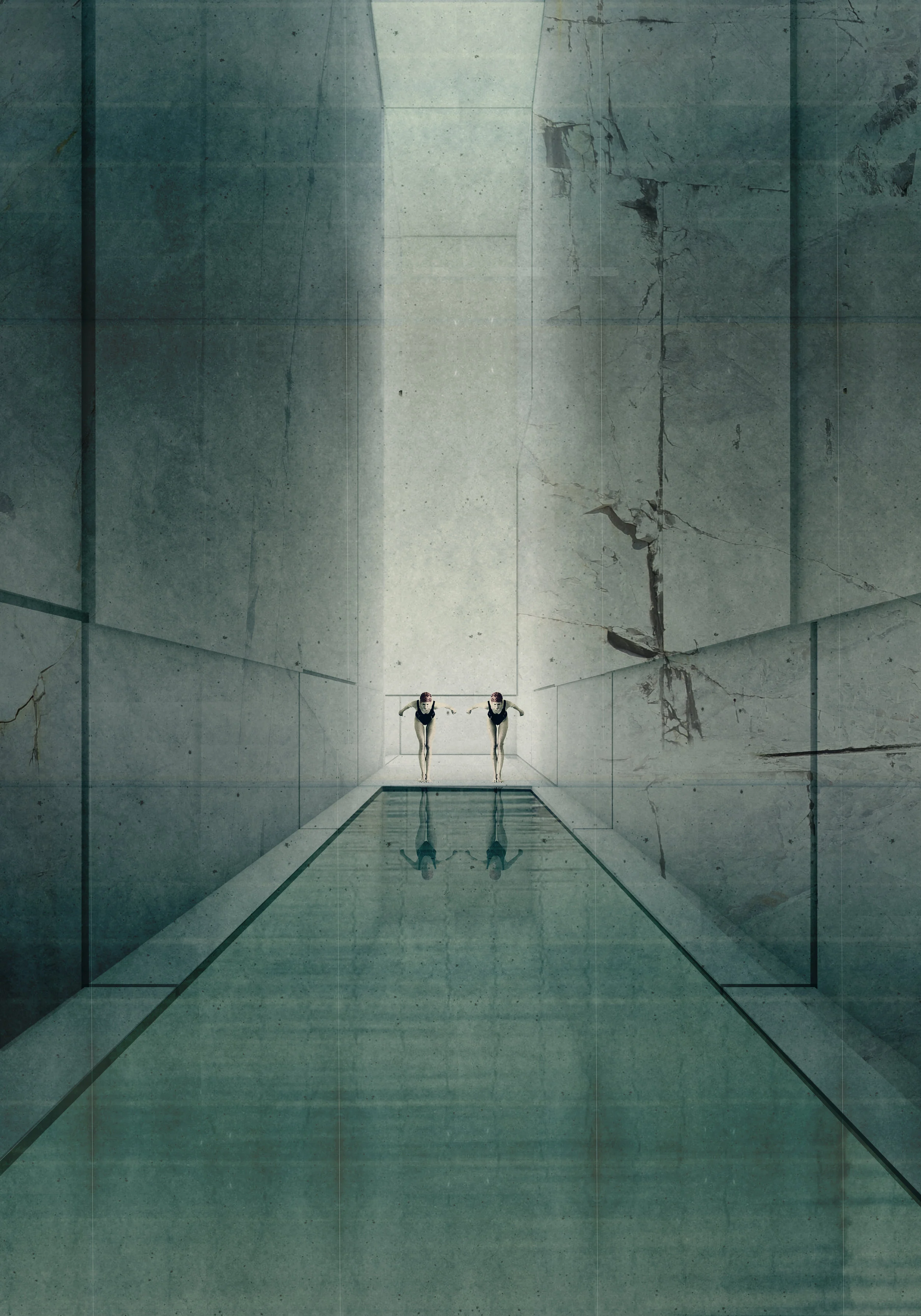
Diving Pool
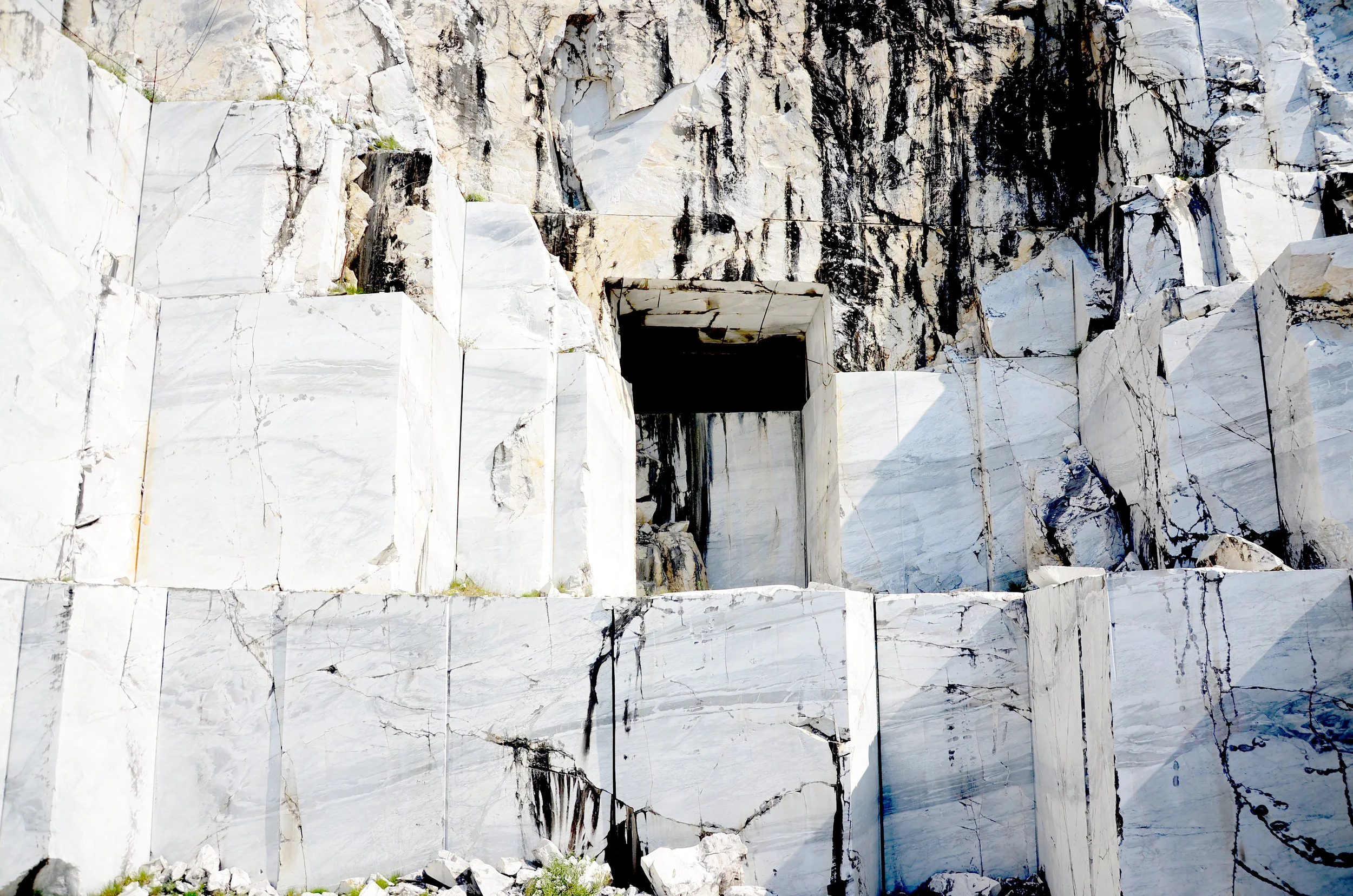
Site: Cave di Morlungo
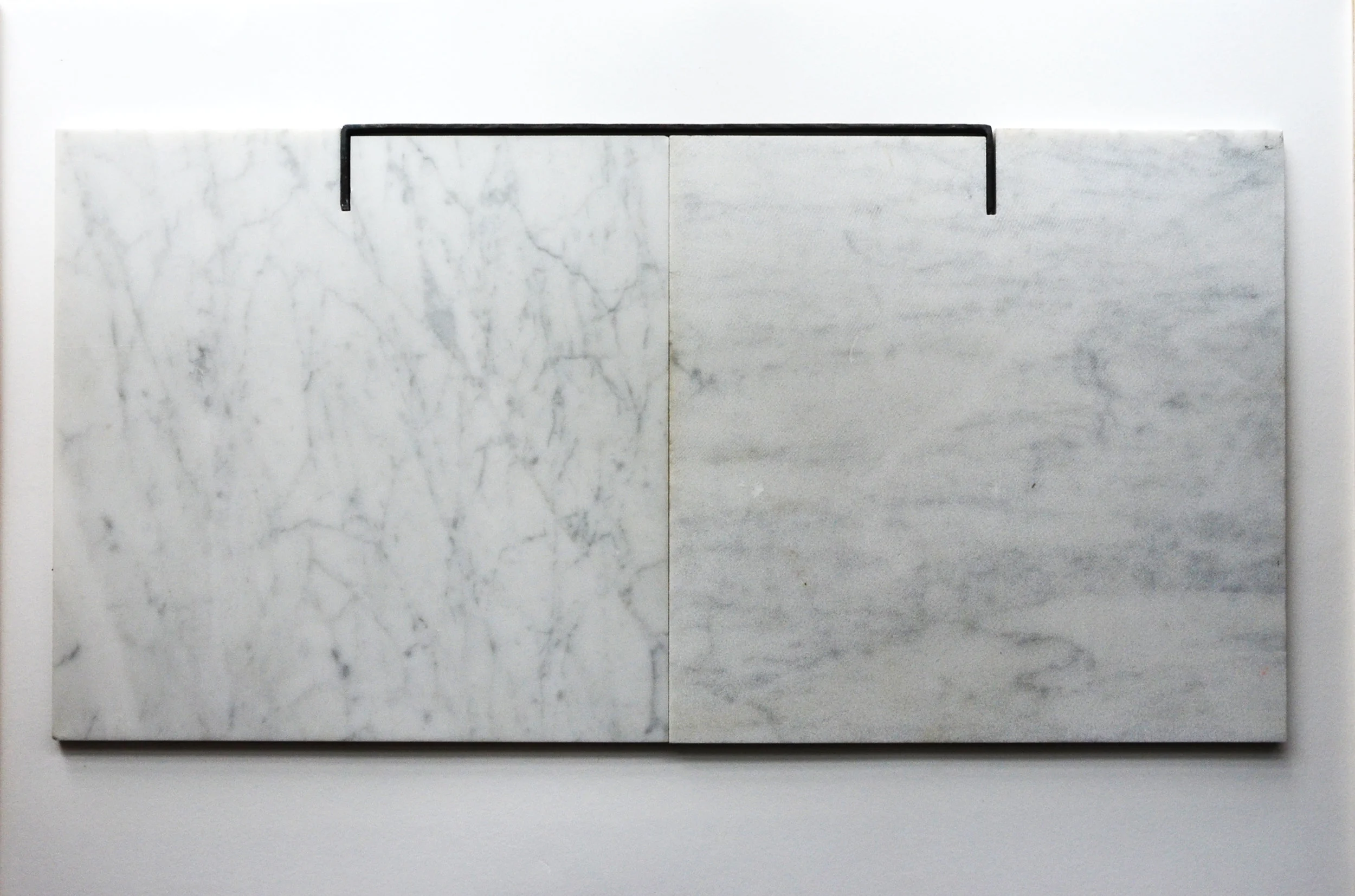
1:10 model of steel joint made together with stone mason and blacksmith
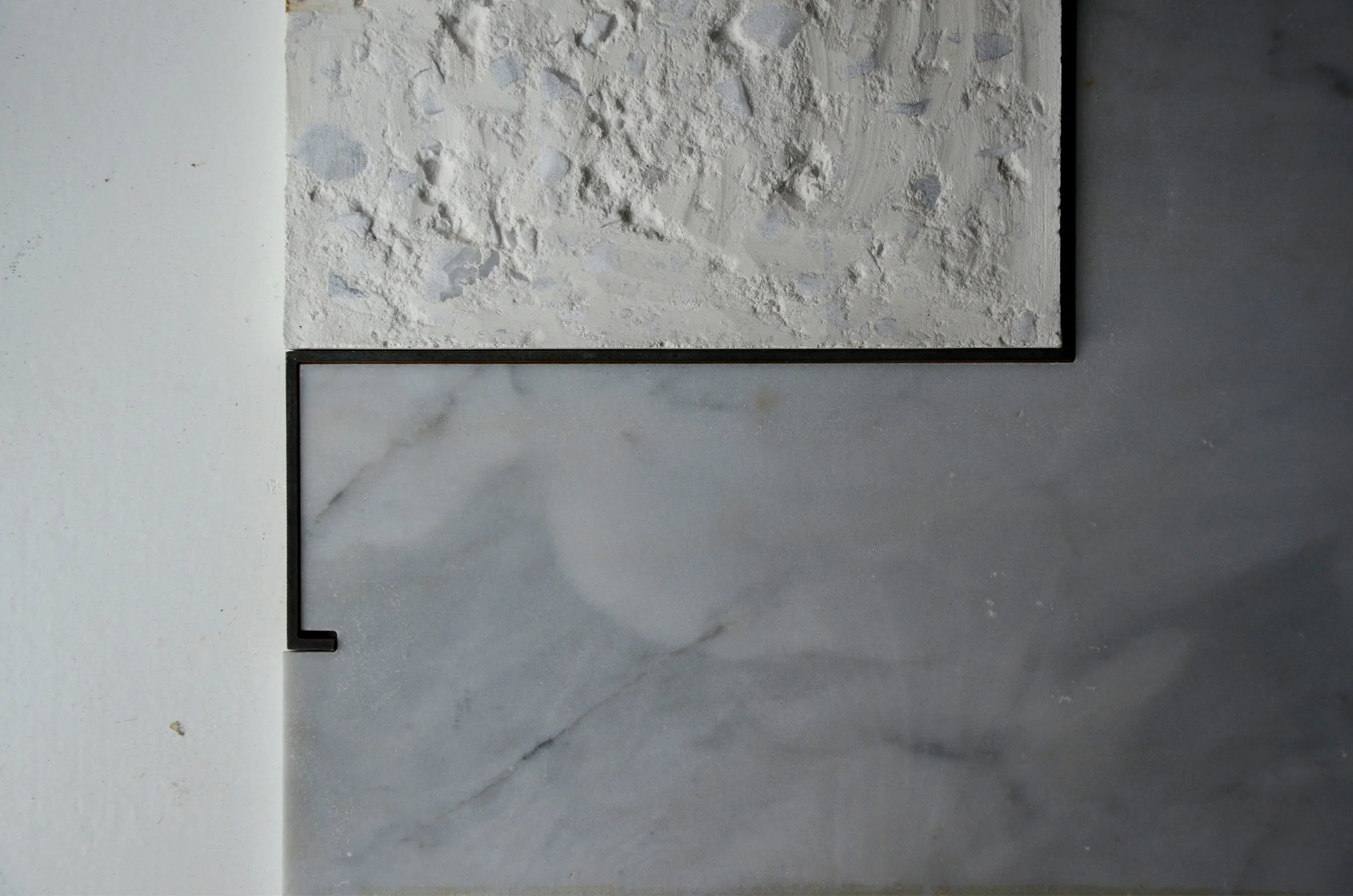
1:10 model of steel joint made in water jet
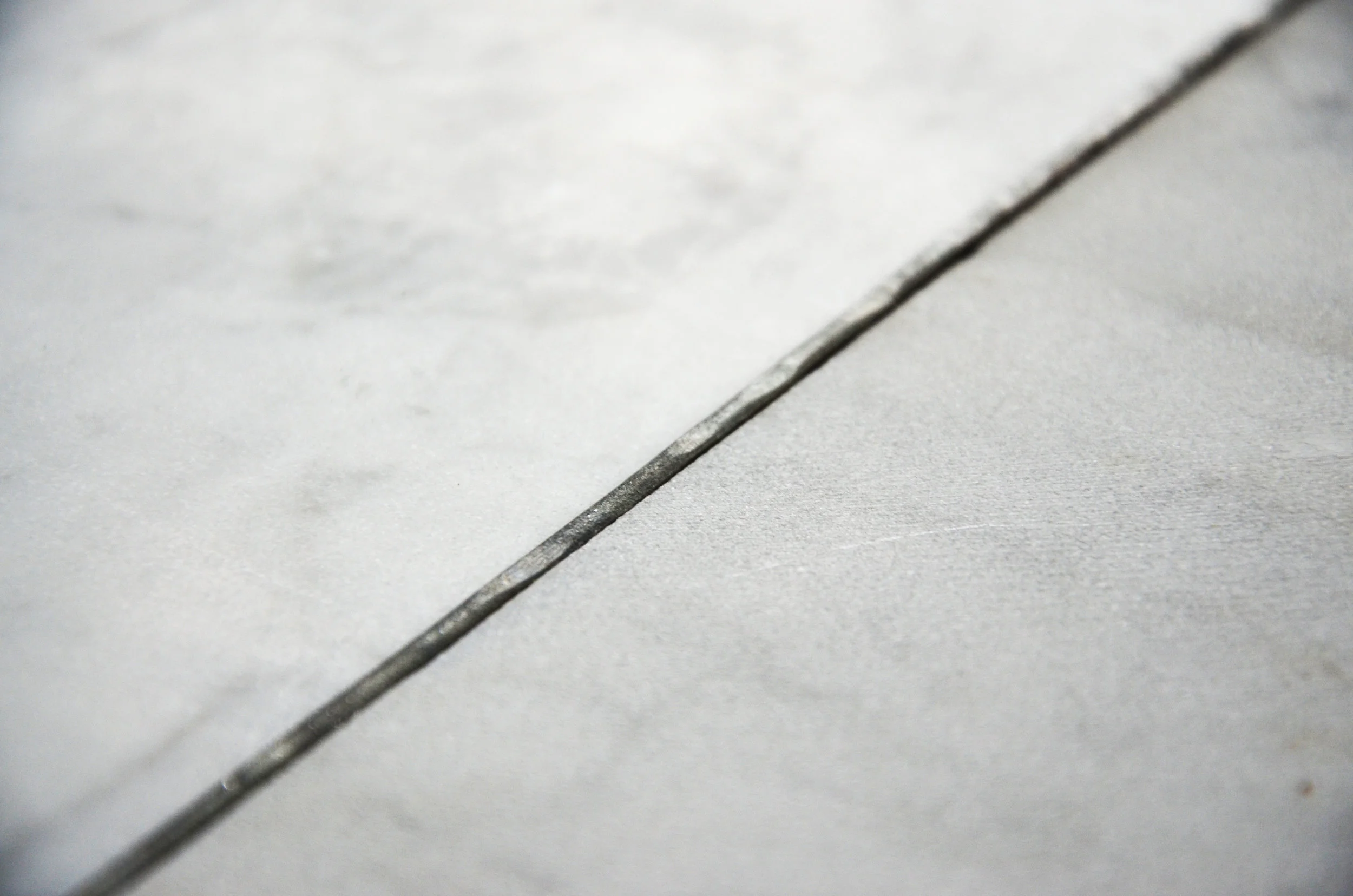
1:10 model of steel joint made together with stone mason and blacksmith
the site
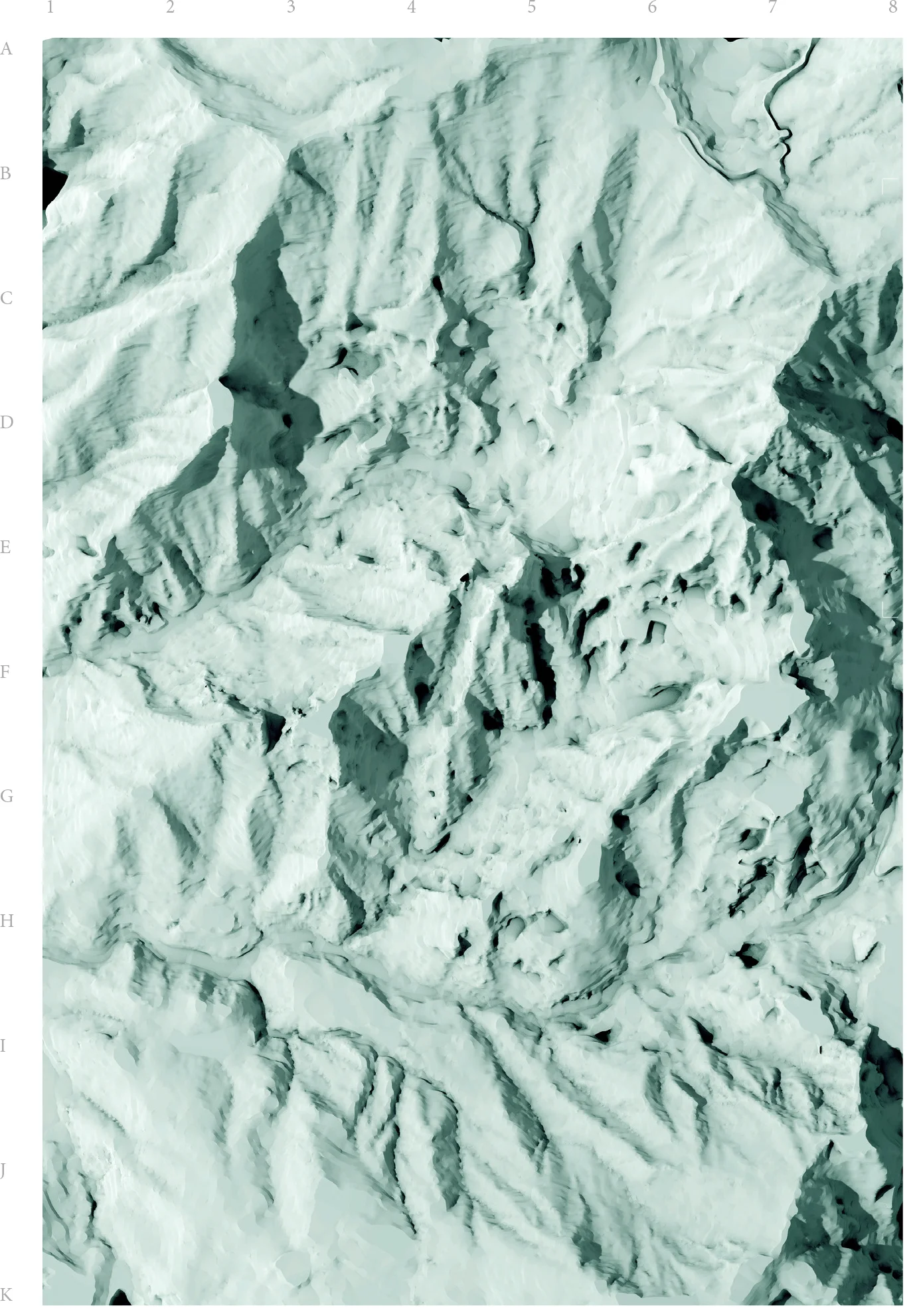
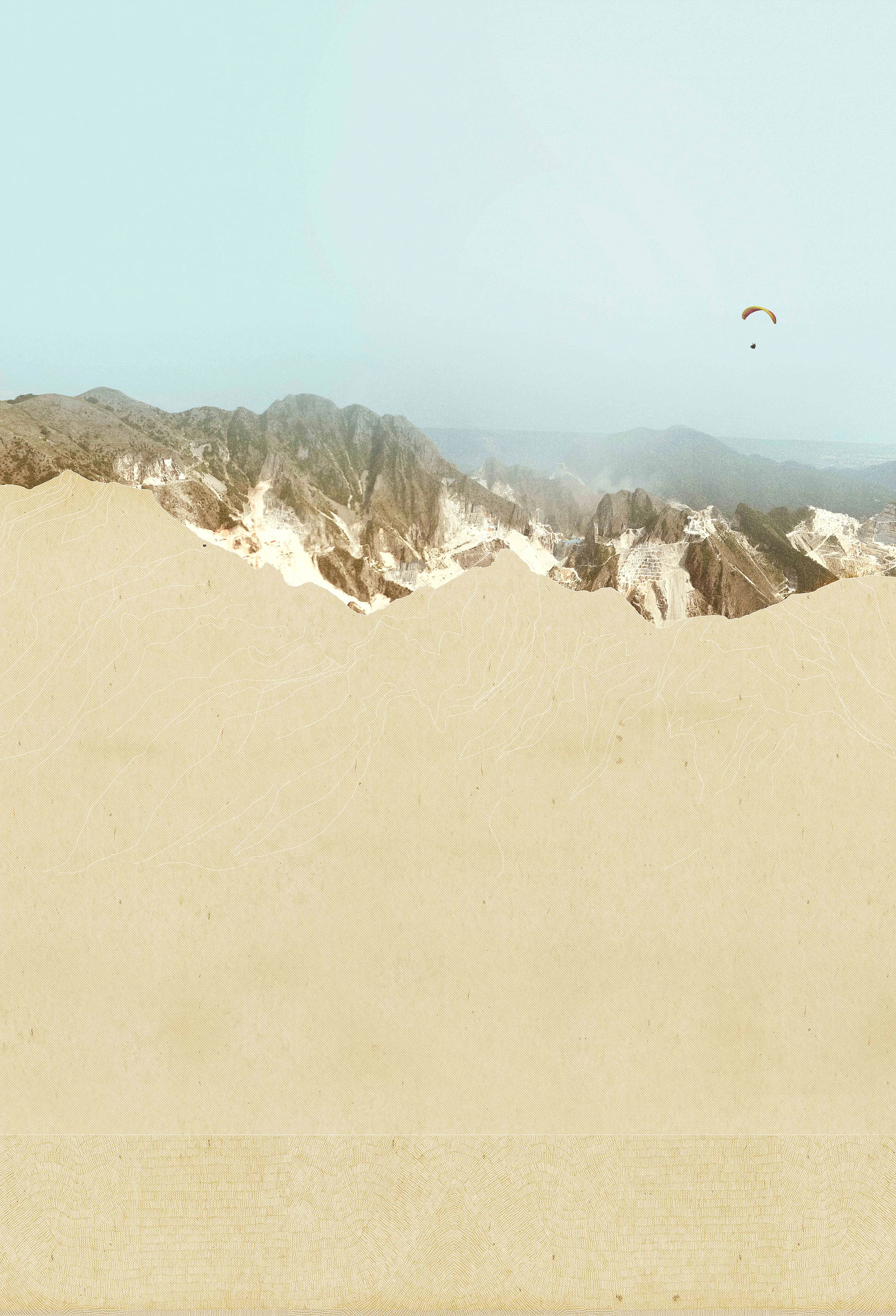
The site, Cave di Morlungo, is a quarry abandoned after the second World War. It lies in limbo between the dirty industry and the green and lush landscape of the protected UNESCOS Geopark area. The quarry´s manufactured topography is in addition to being blasted, cut with saw, steel and diamond wire, and has dimensions of 3x3x7 m creating a perfectly geometric atrium space.
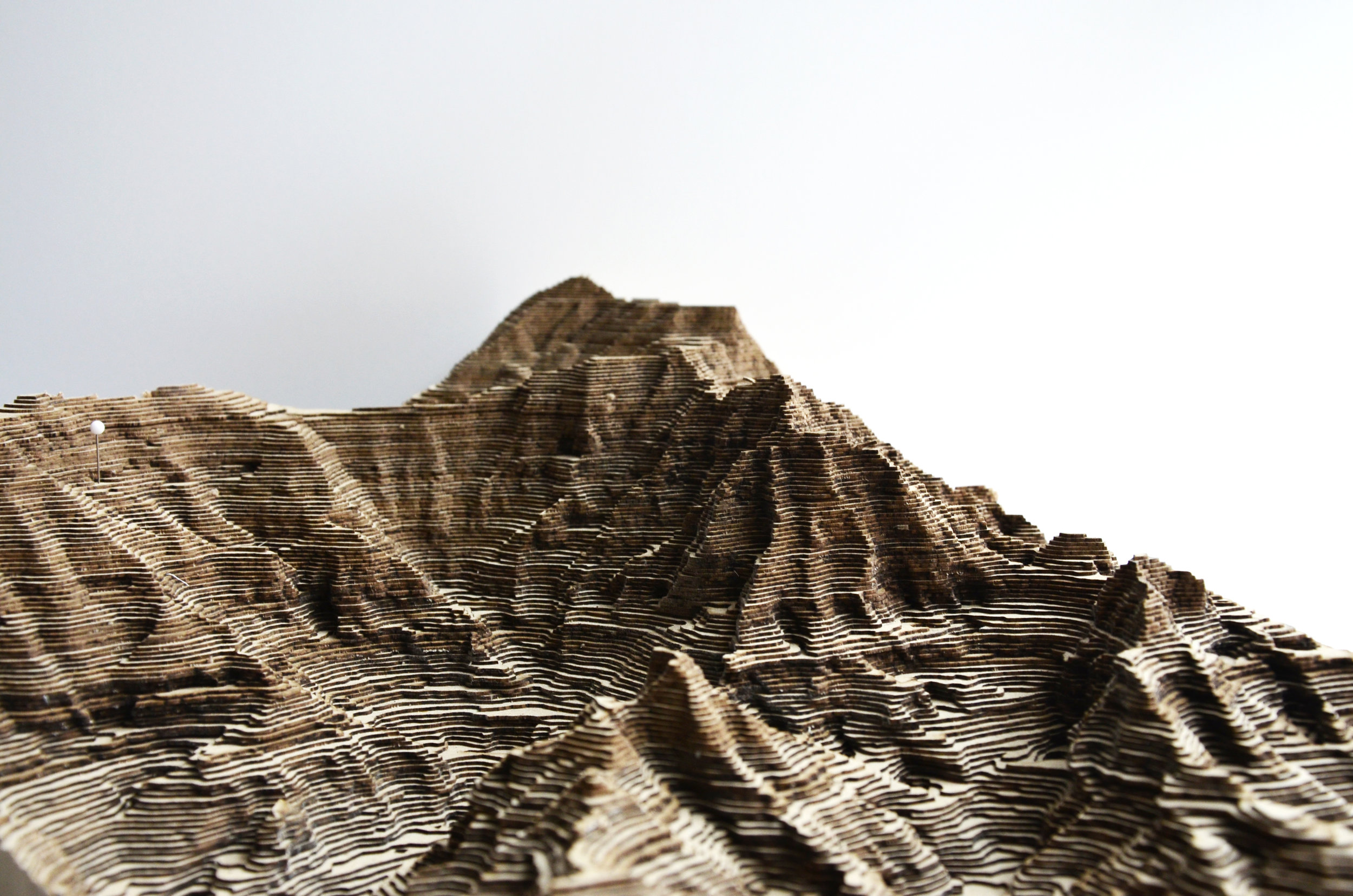
Model of context 1:10 000
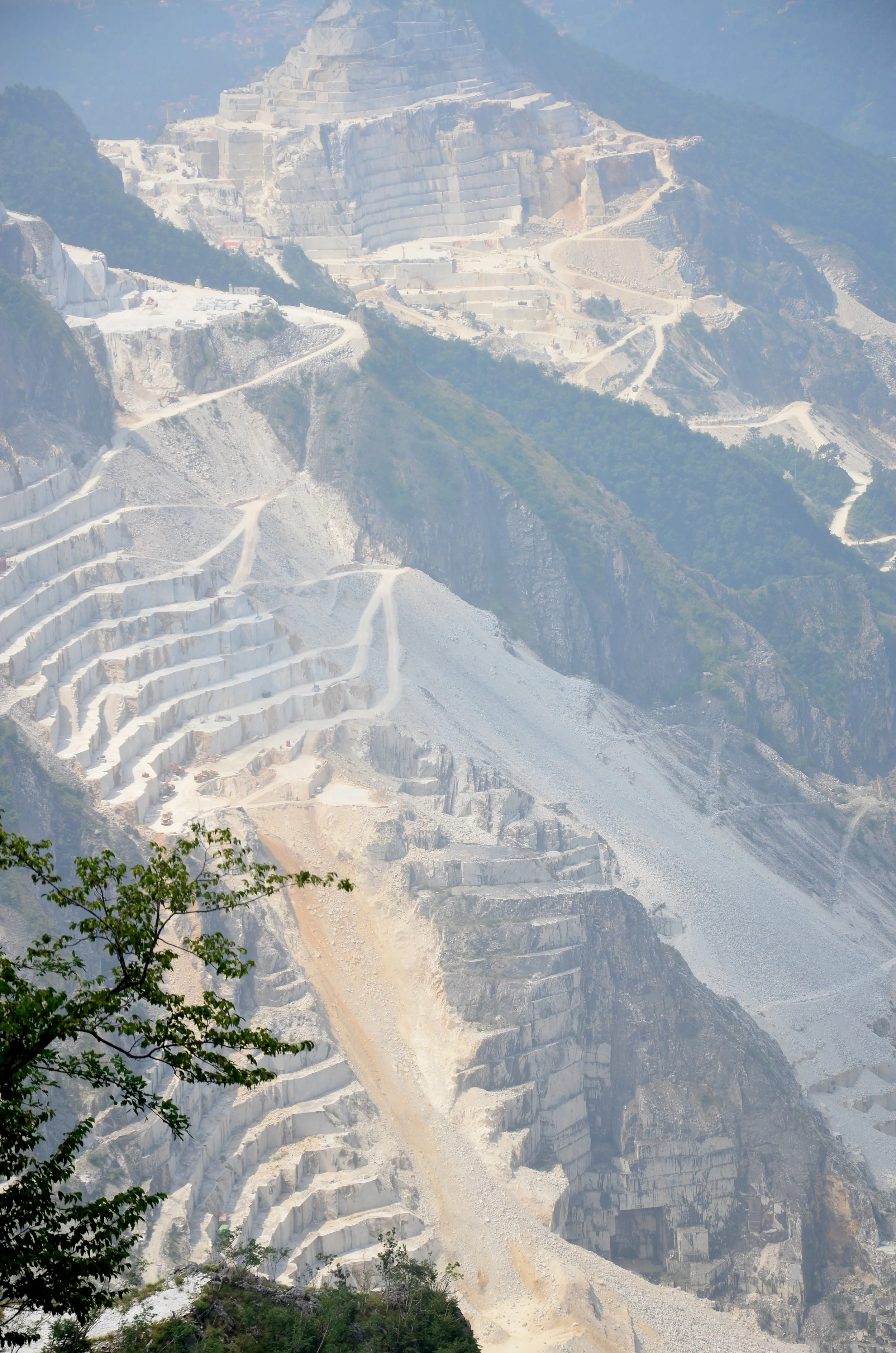
Industrial Context
The industry
The marble industry in Massa-Carrara hold at least 650 quarries, where ca. 80 are active, and the rest is fully exploited or abandoned. Geologists assume the surface area of 67 km2 holds 60 billion m3 of marble.
Every year 9 million tons are excavated.
Quarrying
Quarrying methods (below) that shaped the topography of Cave di Morlungo. The intervention in this project uses the modern diamond wire (4) to cut out blocks of 3x3x7 m
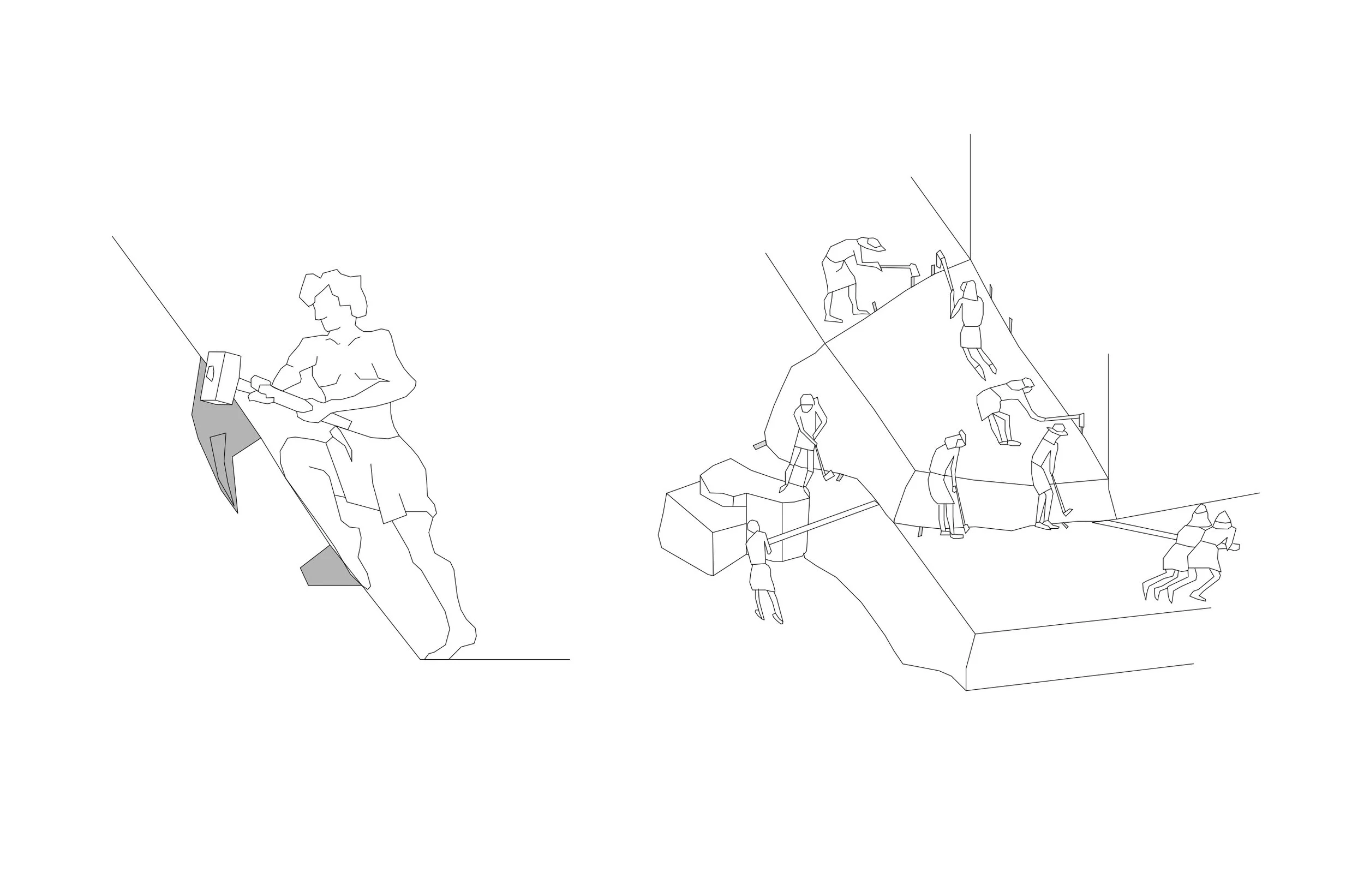
1 Hand Cut - pre Roman and Roman Age
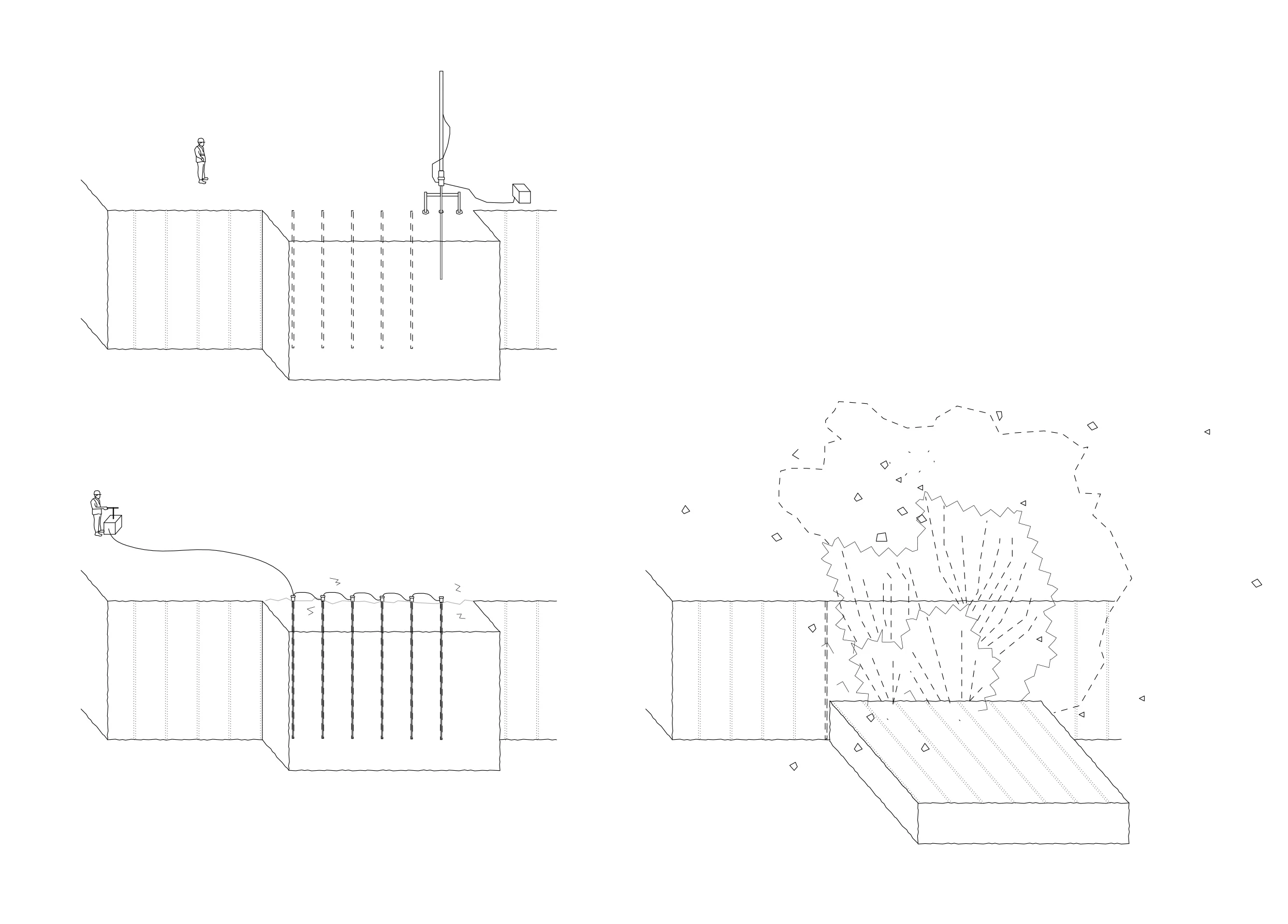
3 Explosives 1700s -
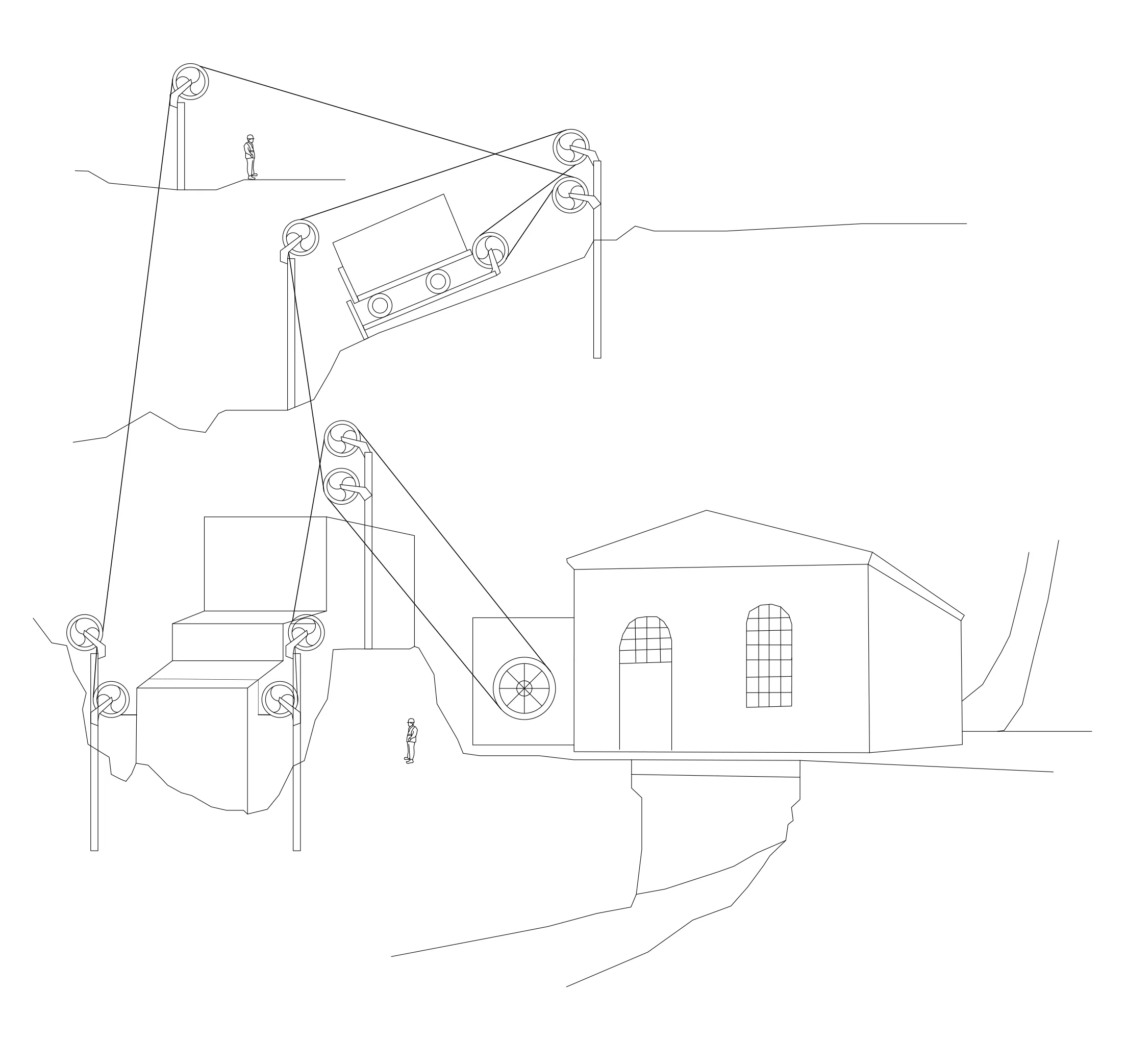
2 Steel Wire Cut - 1800s
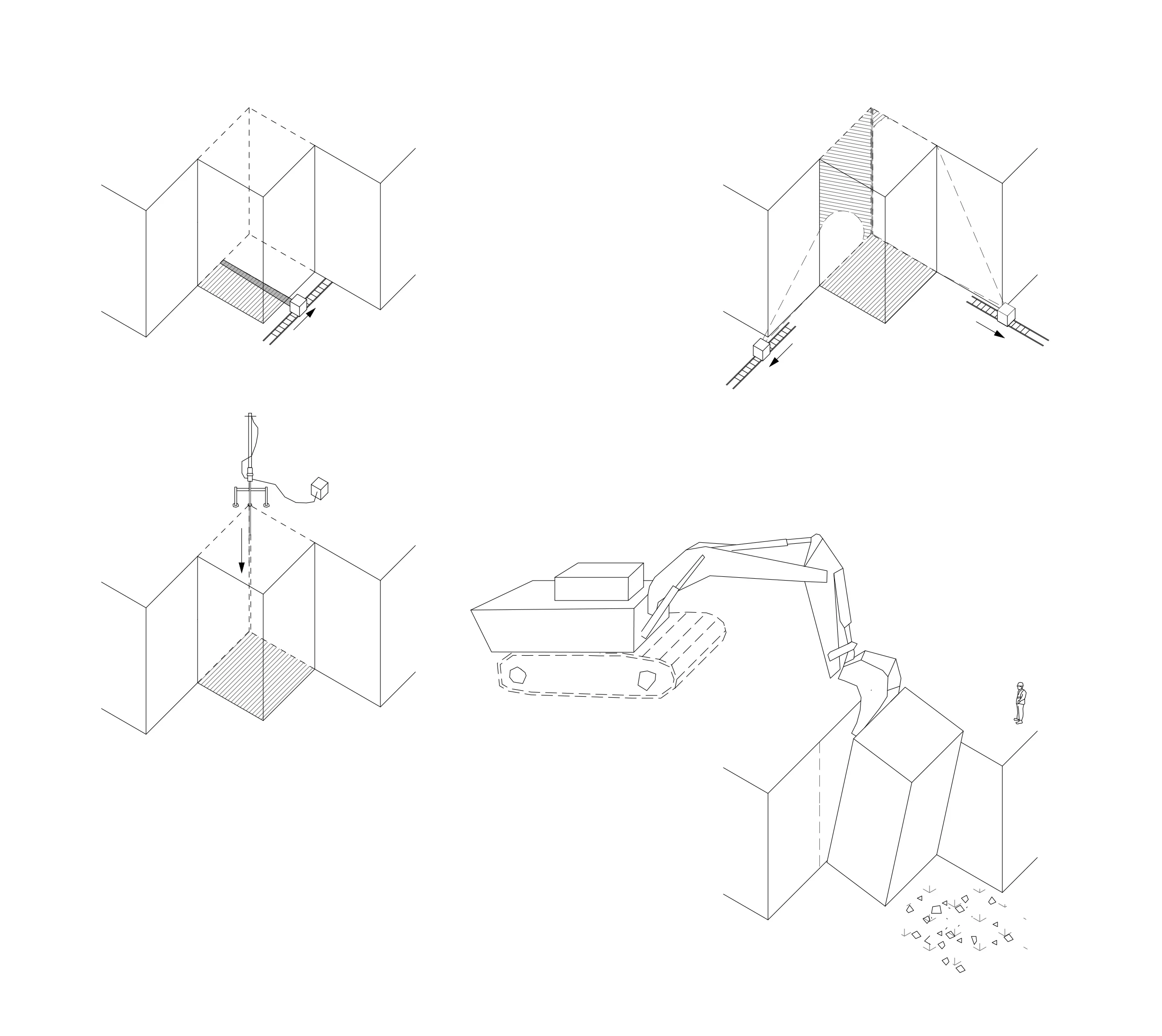
4 Diamond Wire Cut - 1960 -
quarrying method as architectural language
The nature-destroying properties of the quarry, that are manifested in damaged water drainage and waste from explosions, can, nonetheless, be used to create space from rock, water, and light. The bath exploits the existing topography and is shaped through modern quarrying methods using saw and wire; the space becoming a direct result of the subtraction of marble blocks of standard dimensions. Explosive waste is crushed and reused in casting of marble concrete elements as an addition to the quarry. Rain water is collected, choreographed and led into the mountain pools.
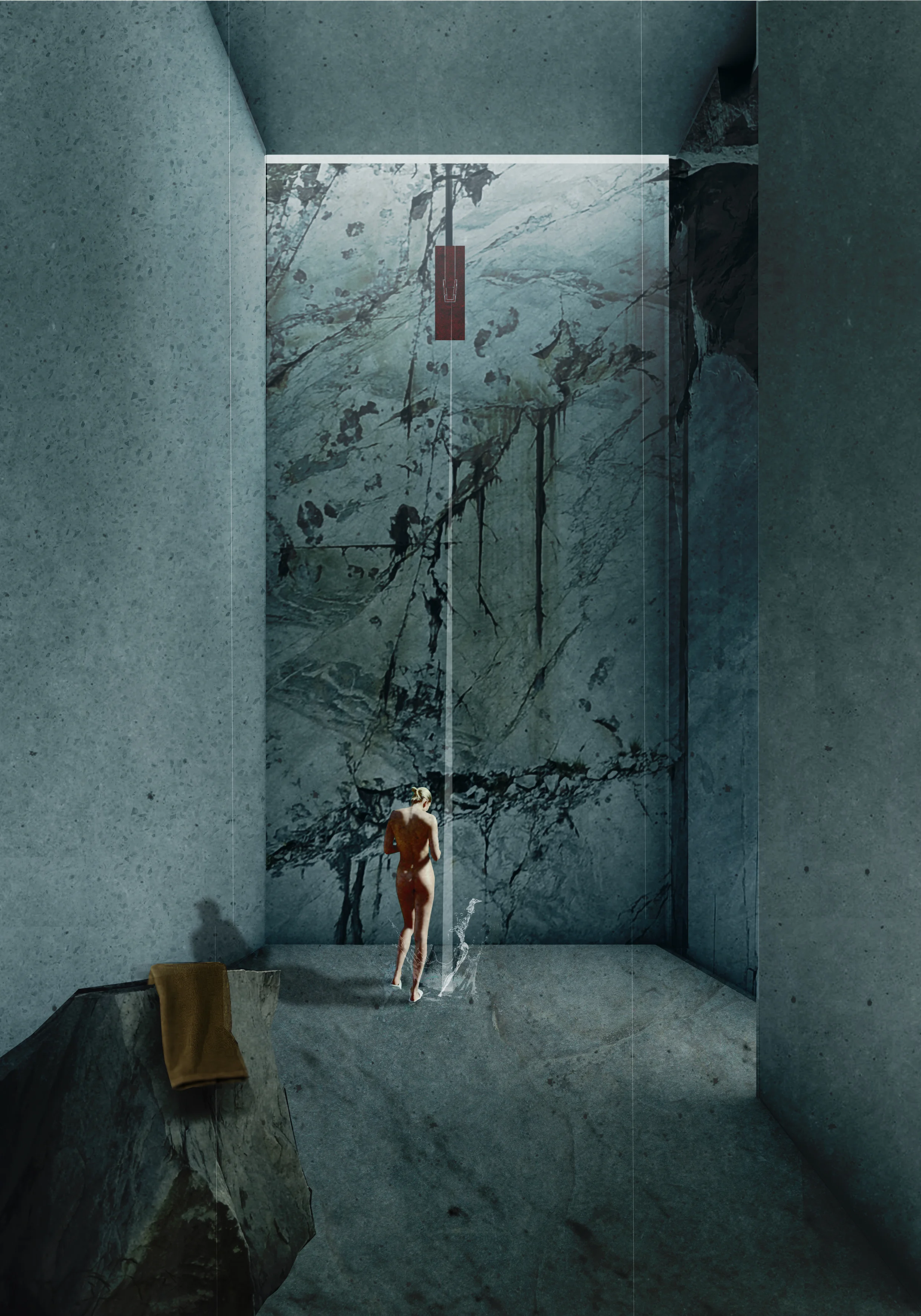
Rain Shower
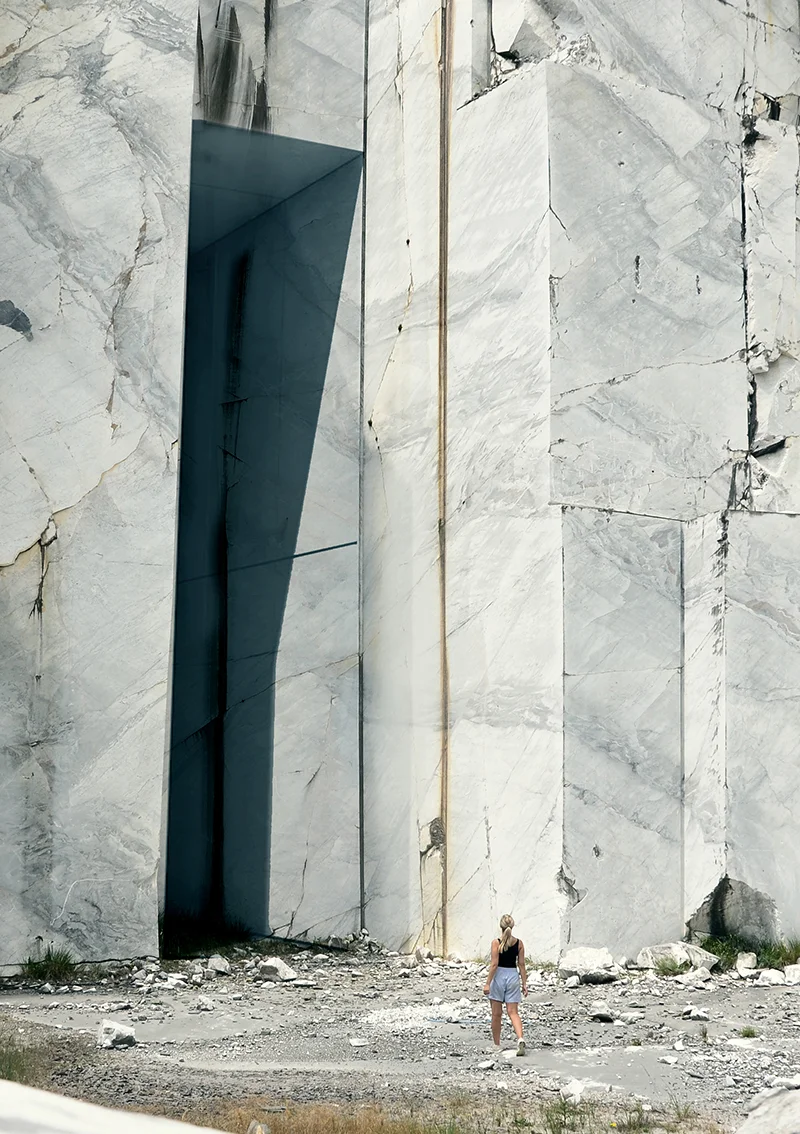
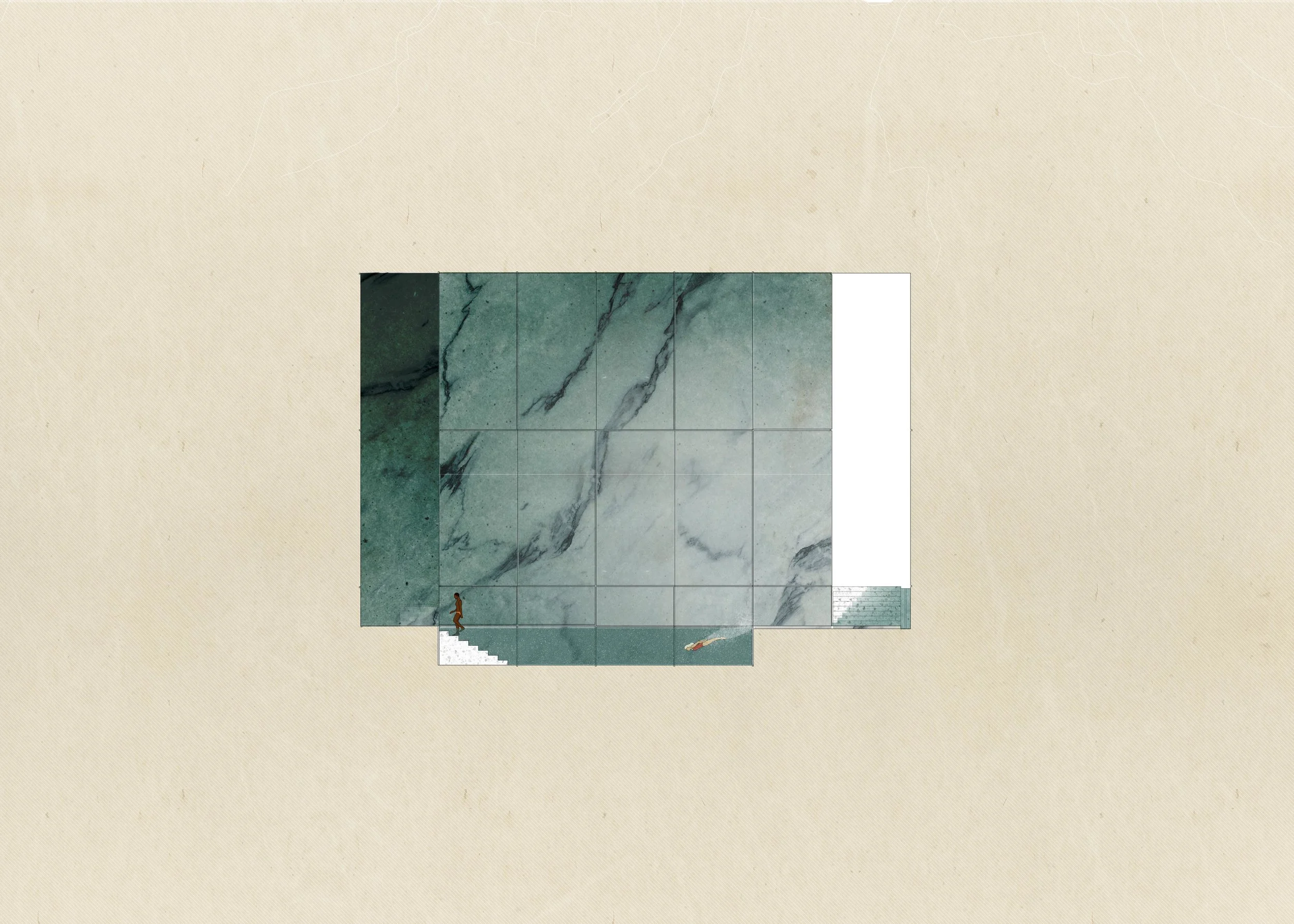
Section Diving Pool
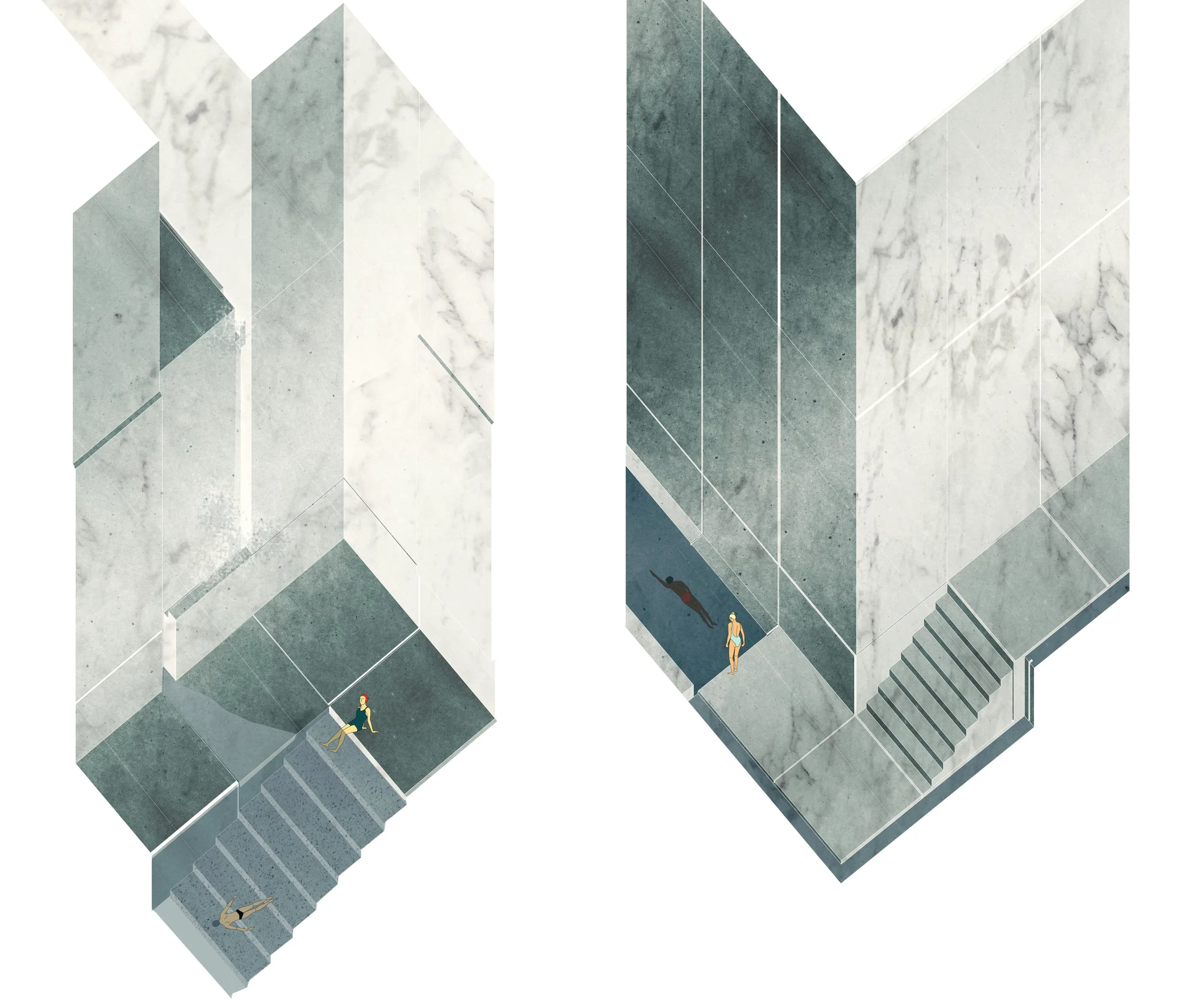
Axonometry
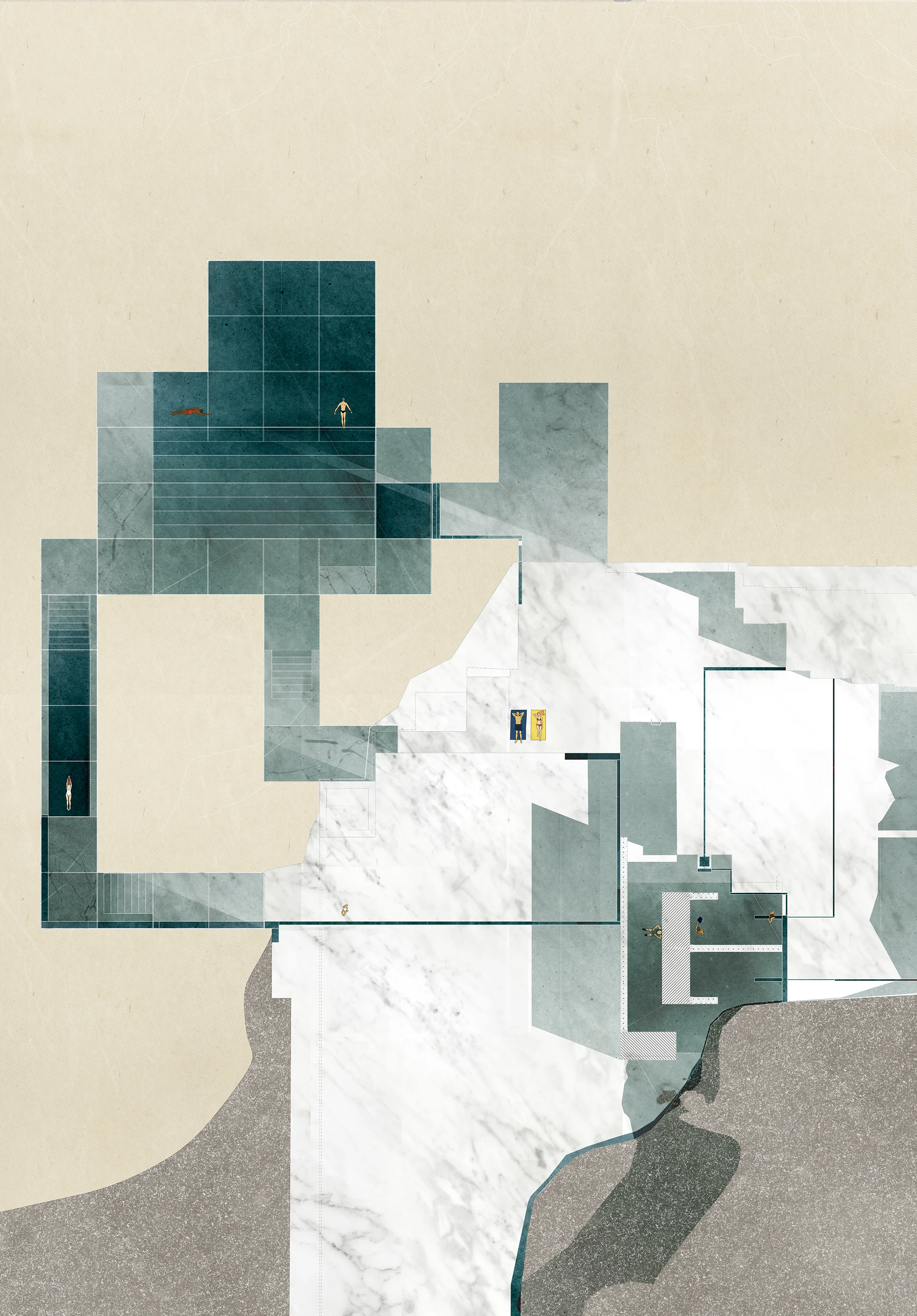
Plan Drawing
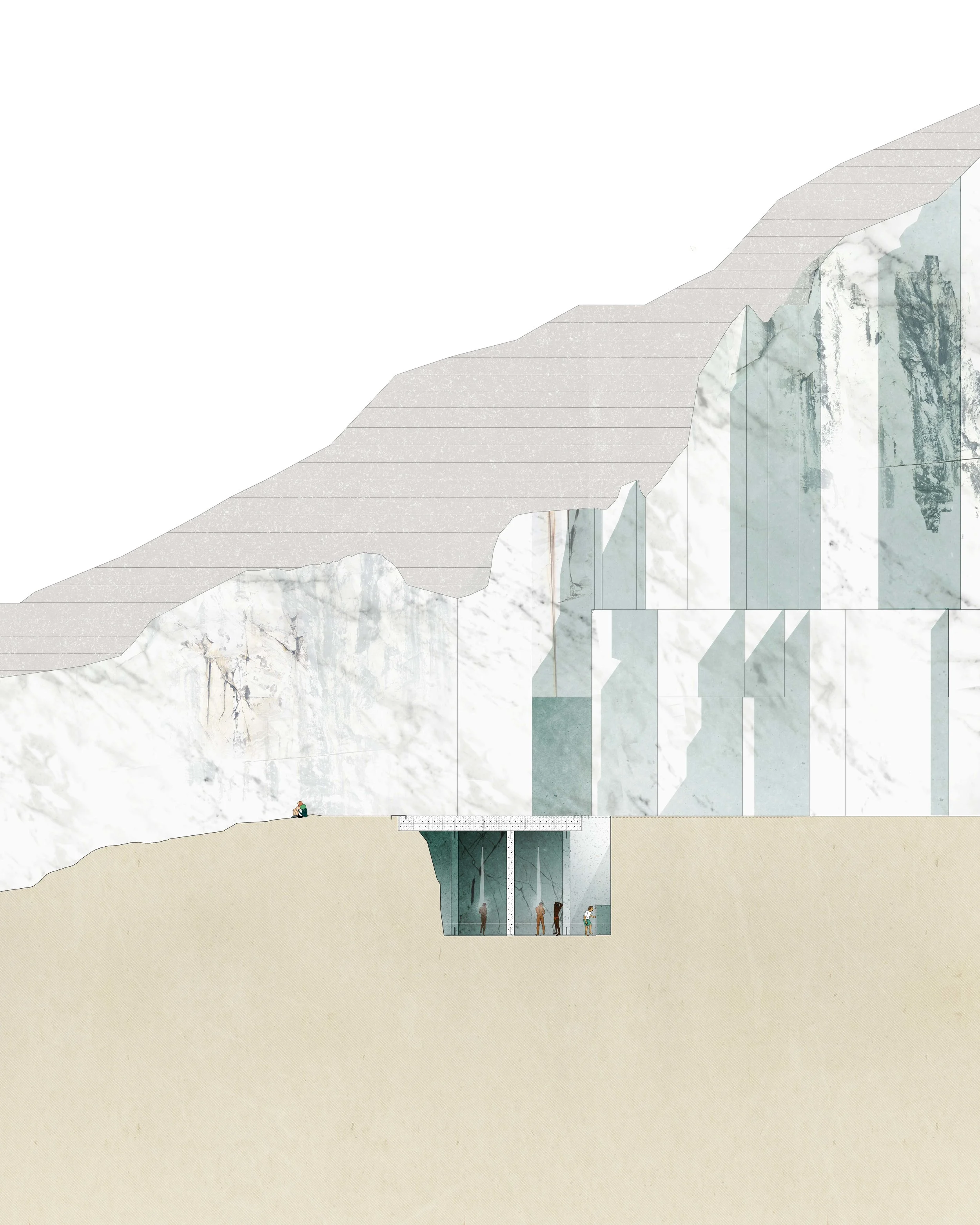
Section Shower and Wardrobe
Manufactured Landscapes
Landscape Section: Project Location